
Indonesia: Preserving Tolerance
250 million people and 17,000 islands; Preserving tolerance in Indonesia is no easy task. However, historical perspectives have a few things to teach us...

It may be interesting to try to “explain” Indonesia, and in particular to show how this “improbable” country of 250 million inhabitants distributed over more than 17,000 islands has managed to retain its unity whereas most other multi-cultural countries are threatened by chaos when not in the midst of it. However, in order to continue to preserve tolerance in Indonesia, we must learn from the past.
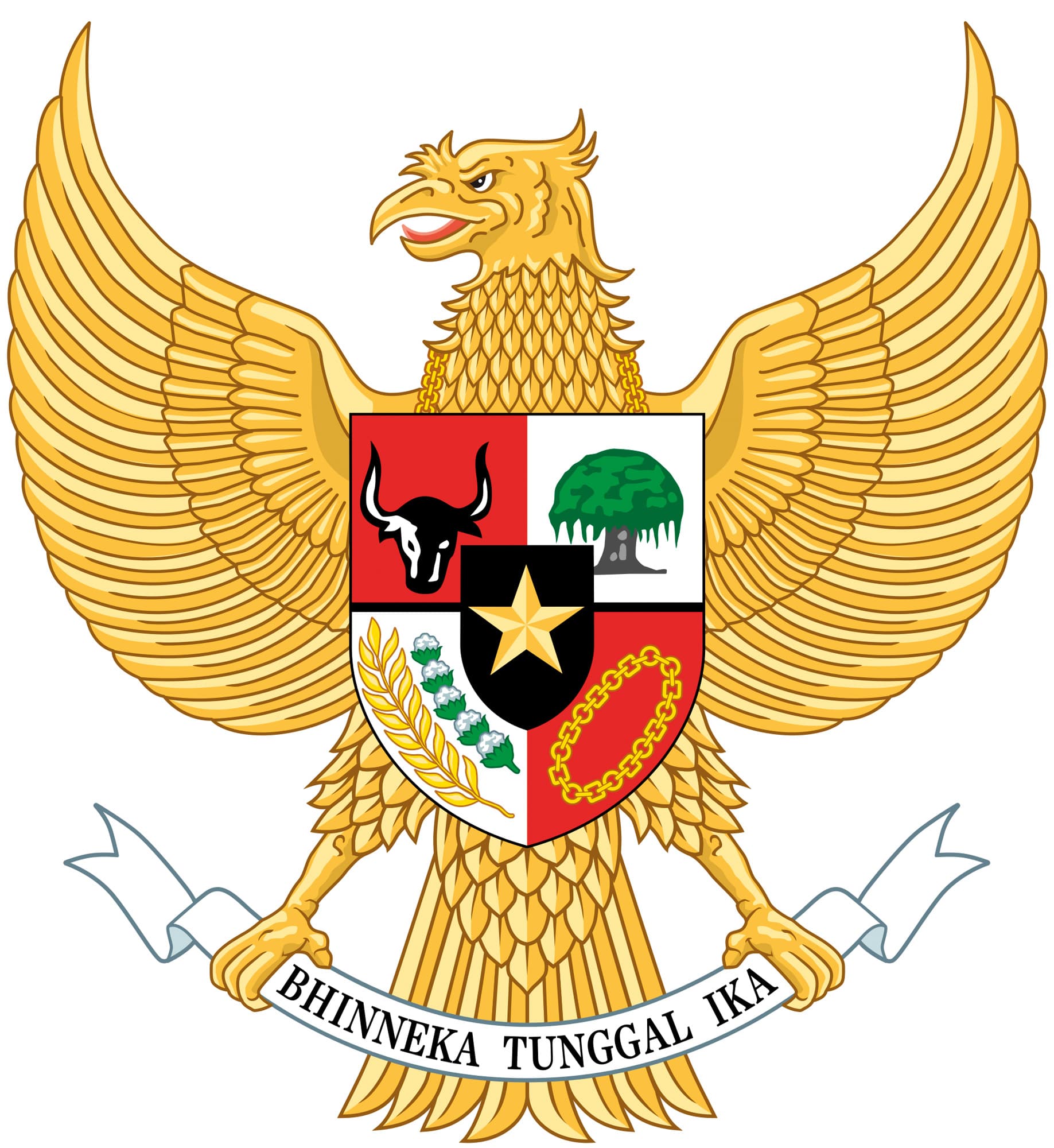
What must be first emphasized is the wisdom of the country’s founders: Indonesia was established on the basis of a unique political compromise, between its Moslem majority and its non-Moslem minorities entrenched in several parts of the country. The compromise, set on independence in the Piagam Jakarta (1945), was that Islam would not be the state religion, but that the state would nevertheless be religion-inspired. This realistic compromise was formulated ideologically in the five principles of the Pancasila (Oneness of God, Humanism, Democracy/Deliberative consensus, Nationalism and Social justice) which added to the national motto, Unity in Diversity (Bhinneka Tunggal Ika) constitute the foundation of the Indonesian state and nation.
It was a moderate system: nationalism was softened by humanism; religious belonging and practice were kept vague; and the reference to social justice was mild. All principles were furthermore linked to Indonesian notions and habits while also referring to “universalist” notions such humanism, socialism, spiritualism and “open” nationalism.
No less importantly, this Indonesian system (Pancasila and Bhinneka Tunggal Ika) enabled a multi-layered identity, with nationhood on top and all other layers (religion, ethnicity, chiefdom, language) virtually on the same level. Thus there was no contradiction between being at once Balinese, Indonesian and Moslem or Javanese, Christian and Indonesian. Compare with Europe where a European identity has difficulty coexisting with, say, a British and Moslem identity.
The suppleness of the system has enabled Indonesia to survive as a state for 70 years and to presently appear as arguably the most successful indigenously multicultural country in the world.
This success was helped, however, by a set of favorable conditions:
In past Javanese tradition - still alive in Bali in its original form - the notion of “otherness” is alien. What matters are one’s deeds (karma), not one’s faith, and the ultimate goal is to achieve, not “paradise” proper, but Union with the Divine- both mystically during life, and “cosmically” upon death, when the soul is expected to melt into the cosmos.
In past Javanese tradition - still alive in Bali in its original form - the notion of “otherness” is alien.
Today’s Javanese have embraced an open brand of Islam that has had little impact on their worldview. Many still emphasize in their behavior on what is “common” to all religions rather than what differentiates them. These people -called abangan if commoners, and priyayi if members of the elites- are often nominal Moslems, or even Christians. To them, faith is irrelevant compared to mystical attempts to unite with the divine. It is frequent to hear them say that “all religions are the same” or to be proud of the fact that several religions coexist in their family.
_____
“Religion is like a shirt, if it does not suit us, we can change it with a new one”, a friend once told me.
_____
It is this open approach that has enabled Islam to smoothly penetrate Java: the 14th and 15th century missionaries of Islam did not hesitate to use puppet-show theater (wayang) and epic stories such as the Ramayana and Mahabharata to spread the tenets of their religion. Similarly, the cult of Moslem saints has enabled the passage from ancestors’ cult to Islam without anyone objecting to it.
Even when relatively more mainstream, the brand of mystical Islam prevalent among members of Sufi brotherhoods such as Naqshabandiah or Qadiriah remains highly tolerant of other cults and traditions. Those brotherhoods make up the core of the Nadhatul Ulama, the main Moslem organization of Indonesia (60 million followers). Last but not least, even a reformist Islam such as the one advocated by the other great Islamic association, Muhammadiah, has long given up any intention to turn Indonesia into an Islamic state. In fact, both Nadhadul Ulama and Muhammadiah advocate an “Indonesian Islam” (Islam Nusantara), which most of its intellectuals see at odds with –in the words of Azyumardi Azra—the “international” brand of Islam presently spreading from the Middle-East. Tolerance in Indonesia, in other words, prevails.
Yet, today, this whole political-cum-cultural-cum religious system is under threat for several reasons:
If nothing is done, religion, which was until twenty years ago but a minor vector of social identity, will quickly turn into its paramount component. We already see among common people Christians and Moslems, or Hindus and Moslems separating from one another in their social life and constitute increasingly separate communities.
The main challenge of preserving tolerance in Indonesia is therefore to further reinforce its original concept of open-citizenship and to prevent religion from becoming the main determinant of identity, a development which could have unforeseen political consequences - or already has. The Pancasila system is supple, though. And Indonesian politicians, be they Moslem, Christian, Hindu, or other, are aware of the issue. But really, the power lies in the everyday citizen and their openness to embrace 'the other'.
Did you like this article? Read more from historian Jean Couteau's monthly column in Mystery, Myth and Magic. Or, why not subscribe to our e-newsletter or magazine (Indonesia only) to stay up to date!
Read Next
Ramadan, and the Upholding of Tolerance in Bali
The main religions of Bali, Hinduism and Islam, do have their respective concept of tolerance - but it must be maintained.
A History of Islam in Bali: A Story of Tolerance
Jean Couteau outlines the rich history of Islam in Bali and how the religion has had a range of versions on the island.

Bali Still Safe? 2,291 People Enter Bali from East Java
Bali braces for Idul Fitri travel as social distancing relaxes, with thousands entering the island amid Covid-19 and government restrictions.
Otherness, Nationalism & Balinese Identity
Balinese identity when it comes to the context of Indonesian nationalism - where does the Bali psyche lie?