Meru Towers: The Principle Shrine of a Temple
Meru, Bali’s sacred multi-tiered shrine, represents Mt. Mahameru and honors gods and ancestors in temple sanctums.
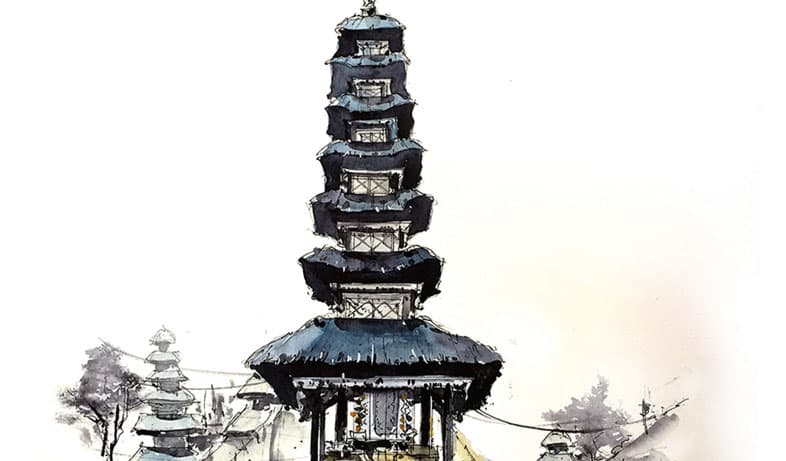
When you travel around Bali and witness the many temples scattered on the island, you will notice some very distinct architectural features. When it comes to the larger temples, the most impressive feature you will see are the meru, the multi-tiered shrines that tower high-above the rest.
The term ‘meru’ is a reference to Mt. Mahameru, the sacred mountain of Hindu (and Buddhist) cosmology. It is fabled to be found at the ‘centre of the world’; its summit, at a million kilometres high, is where heaven is located, the abode of the gods. With its religious importance, Mt. Mahameru has been symbolically represented through architecture, such as the prang in Khmer temples of Cambodia and Thailand, or the Balinese meru towers.
The meru towers, or pelinggih meru, are easily recognised with their pagoda-style, multi-tiered roofs that diminish in size as they ascend. The tiers, known as tumpang, are nearly always oddly-numbered, going from one to as high as eleven levels - except for one meru found at Taman Ayun Temple, which features two levels.
You will find these meru in the jero of a temple, the innermost sanctum reserved for the most sacral activities. As pelinggih, or shrines, they are therefore ‘seats’ for gods and spirits, who will temporarily reside within them. Being symbolic of the great holy mountain, the height of the meru thus shows the importance of the residing god or spirit; the higher up the mountain, the holier the ‘resident’.
You will find these meru in the jero of a temple, the innermost sanctum reserved for the most sacral activities.
The eleven-tiered merus are often reserved for the highest of the Hindu gods - Shiva, Brahma and Wisnu - such as that found at Pura Ulun Danu Beratan, whose towering meru is dedicated to Shiva and Paravathi, goddess of fertility and love. The five-tiered merus are dedicated to Bhatara Mahajaya, god of Mount Agung; the three-tiered meru of Pura Luhur Uluwatu is dedicated to Dan Hyang Nirartha, a legendary Hindu priest. Many smaller merus will be dedicated to local gods or deified ancestors.
The roofs of a meru are constructed with the black fibres of the sugar palm tree known as ijuk, and the whole structure is carefully constructed according to the philosophies of traditional Balinese architecture, Asta Kosala Kosali.
The most impressive meru towers on the island can be found at Pura Besakih, Bali’s mother temple at Mount Agung; Pura Taman Ayun in Mengwi; and Pura Kehen in Bangli.
Read Next
Pura Kahyangan Jagat: Nine Temples of Auspicious Locations
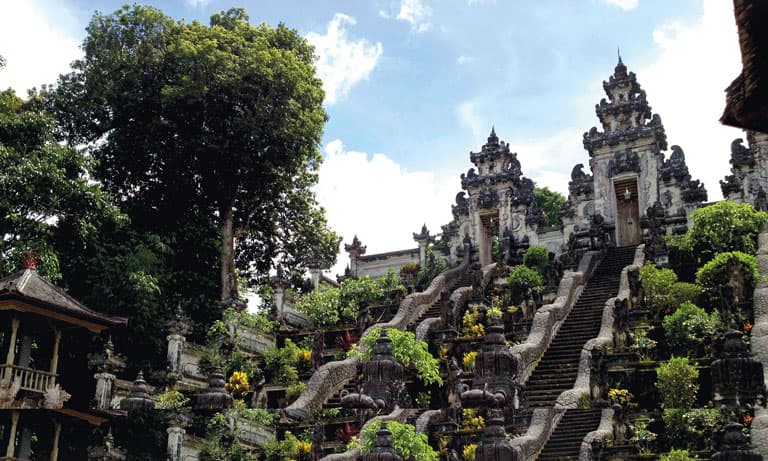
Bali is home to 9 temples more important than others, they are the Pura Kahyangan Jagat and they are represent 8 cardinal directions and its centre.
Pura Besakih, A Dragon’s Sanctuary
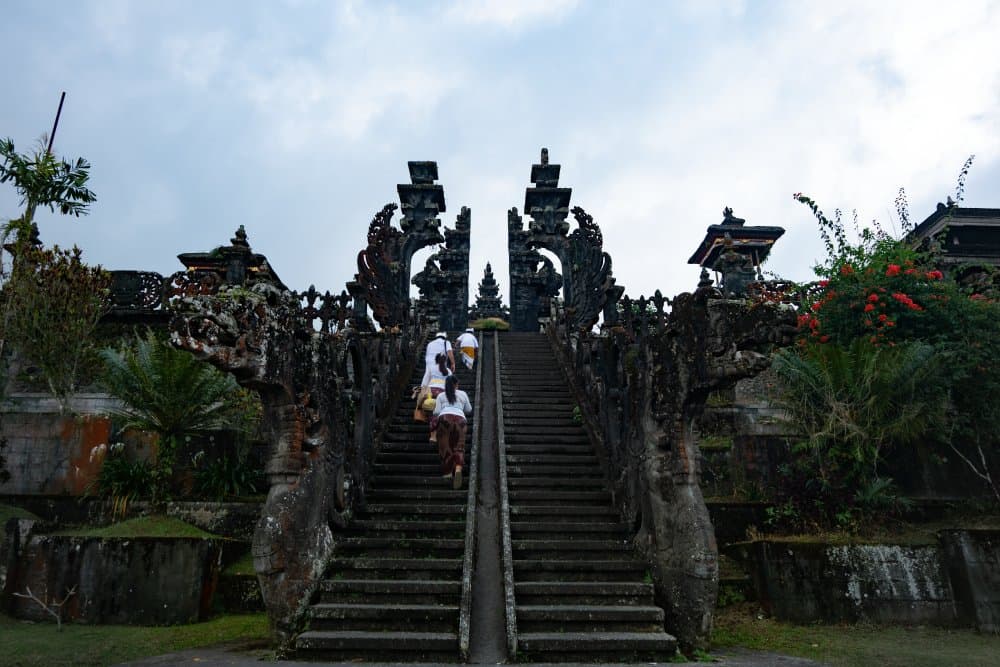
Bali’s ‘Mother Temple’, as it is often called, Pura Besakih is found 900m high on the slopes of the great Mt.Agung in the Karangasem Regency.
Senduro: The Persistent Shadow of Majapahit over Java and Bali
Explore how the Javanese village of Senduro preserves its ancient Majapahit roots and unique Hindu identity linked deeply to Bali.
The ‘Brave’ Monkeys of Uluwatu Temple: A Bali Myth
Perched on a cliff, Pura Luhur Uluwatu is a sacred Balinese temple famed for its spiritual history, stunning sunsets, and daily Kecak dance performances.
Revealing the New Bali Beach Hotel and The Meru, Sanur
Bali's most historic accommodation, Bali Beach Hotel, reopening is in conjunction with the opening of a brand new hotel, The Meru, Sanur.