Canang Sari : Bali's Daily Offering
Canang sari, Bali’s daily Hindu offering, embodies gratitude and devotion with symbolic colors, flowers, and incense carrying prayers to the divine.

Found on almost every street corner, temple, beachfront, office space, local market and even Bali’s most modern lifestyle establishments, the canang sari is the most pervasive form of offering on the island.
Visitors will often watch in awe as the Balinese Hindu gracefully present the beautifully prepared canang sari, wafting burning incense soon after, but rarely do they understand what it is and why it is done.
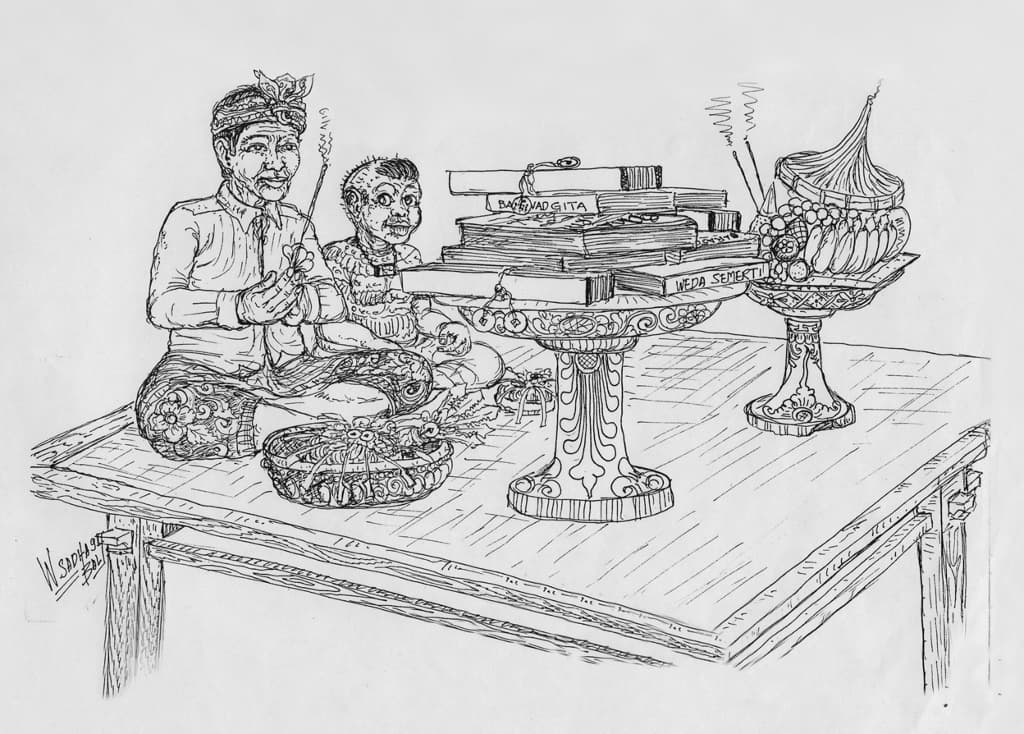
At their core, offerings (or banten) are a
self-sacrifice. Spending time creating them, placing them and even spending
money buying them (as many modern Balinese will do now) are all acts of
personal sacrifice to give thanks to God, or Sang Hyang Widhi. It is a daily
practice of gratitude and appreciation. In the great Mahabharata epic, Wisnu
(in the form of Krisna) tells Arjuna the expectations of God, he says:
“Whosoever offers to me with
devotion a leaf, a flower, a fruit or water, that offering of love, with a pure
heart I shall accept.”
Now that we know the why, we move on to the what. In which Wisnu himself has outlined.
Now that we know the why, we move on to the what.
The majority of offerings in Bali will contain leaves, flowers, fruit and holy water, all to a different extent depending on the occasion. The canang sari itself is comprised of a basket base (ceper) made of woven palm and banana leaves, the filling of the canang is referred to as peporosan.
An integral aspect of the peporosan are the colours. These must represent the Trimurti, the three major Hindu Gods. Shiva the destroyer, symbolised by white; Brahma the creator, red; and Wisnu the preserver, green. Thus lime (white), betel leaf (green) and the areca or betel nut (red) are traditionally used, but flowers, banana, sugarcane or shredded pandan leaves also symbolise these.
To make things even more complicated, the cardinal direction of the flowers also have significance. White flowers point east for Dewa Iswara, red flowers point south for Brahma, yellow flowers point west for Mahadewa, blue or green flowers point north for Vishnu.
Finally, the after the thoughtfully prepared canang is laid, a stick of incense (dupa) is burned from it and is wafted by the devotee. This is to transport theessence (sari) of the offering up towards God.
Read Next
The Flowers of Bali: A World of Symbolism and Colour
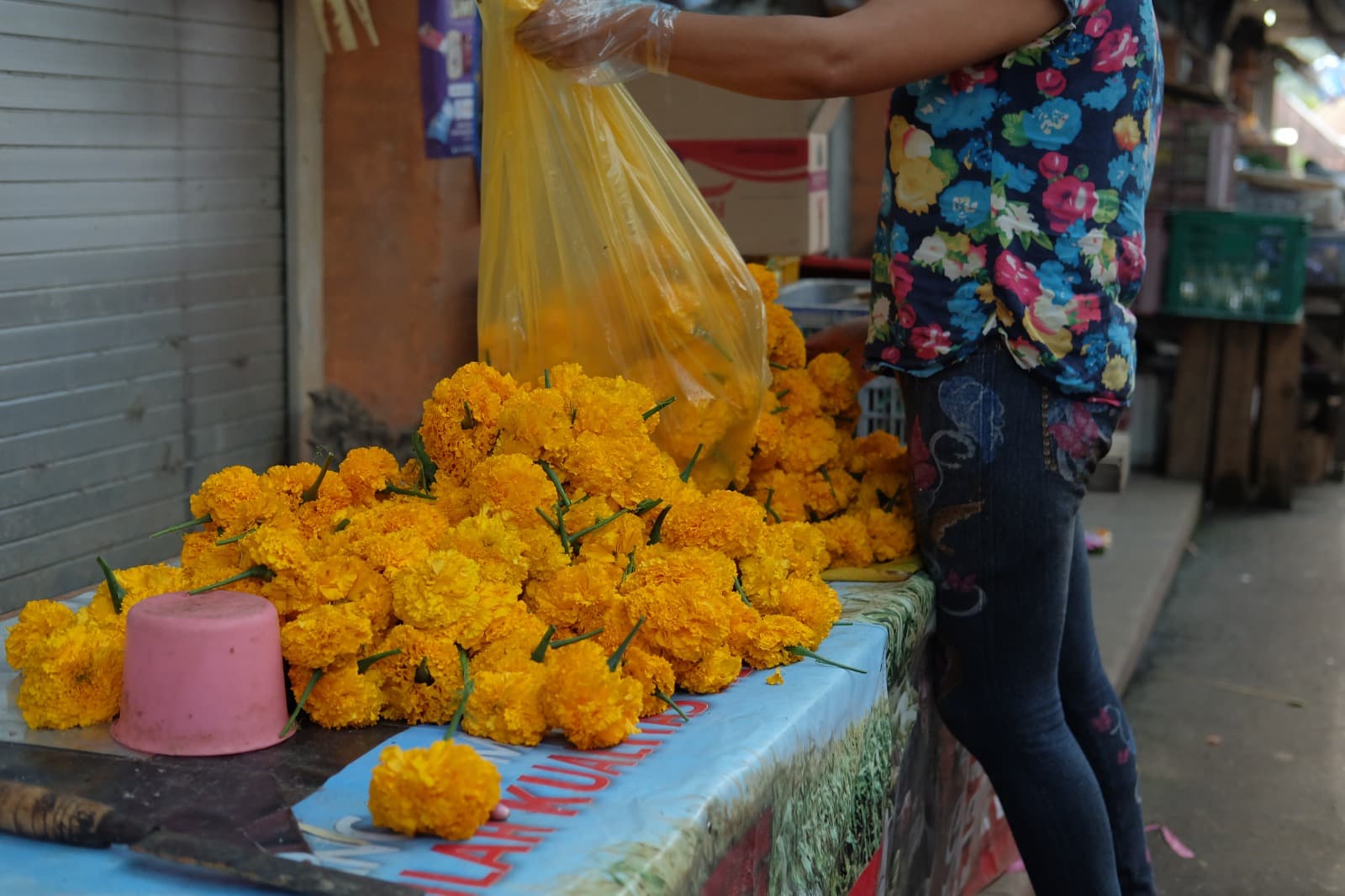
The flowers of Bali are part of a world full of symbolism and tradition. Explore a Balinese flower and its meaning.
Banten Jotan: An Offering for Good and Evil
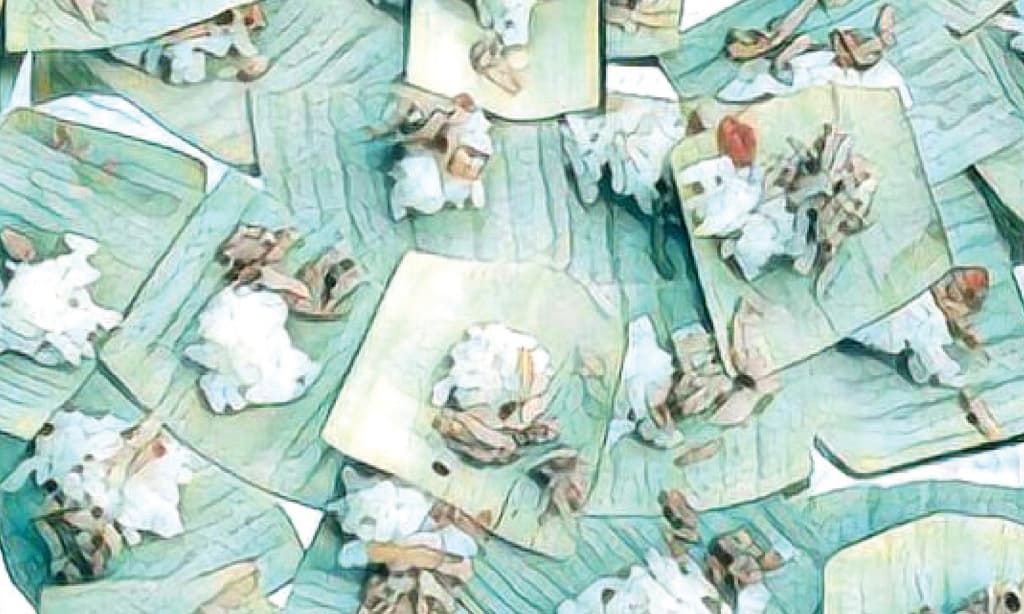
Banten Jotan, Bali’s daily food offering, symbolizes gratitude and balance between gods and demons, reflecting the island’s deep spiritual traditions.
Segehan: Offerings for the Bhuta Kala
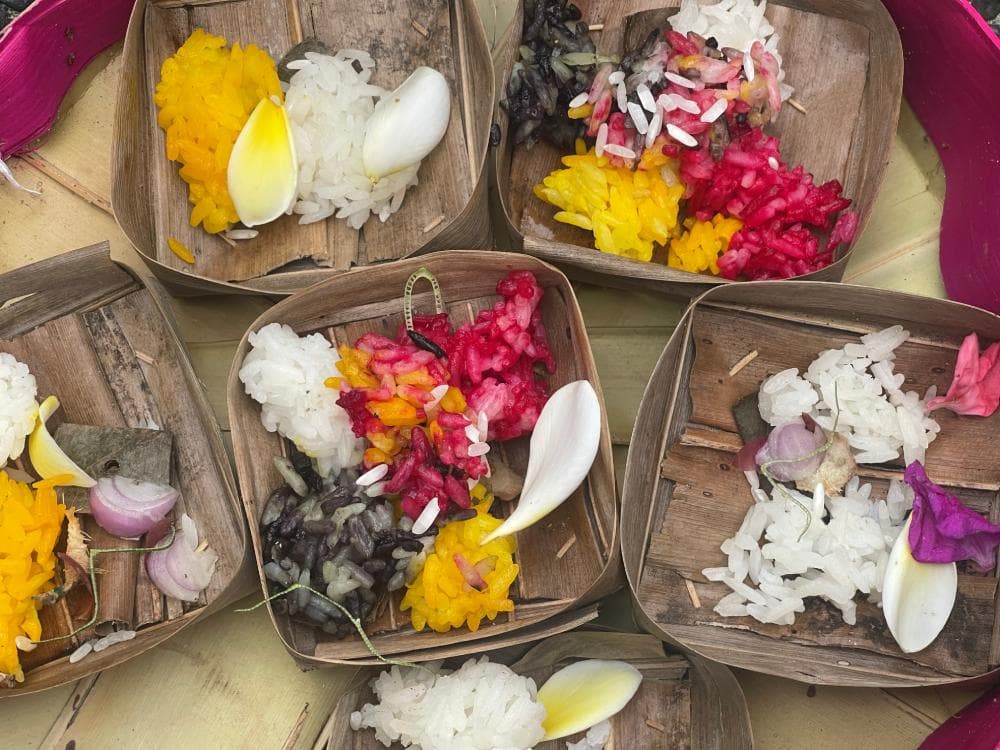
Segehan offerings consists of a simple base made from banana leaves or young coconut leaves (janur), containing rice in various colours.

Offerings: Food for the Gods
Jean Couteau explains why the best food on the island is not for humans, but reserved for the gods.