
Segehan: Offerings for the Bhuta Kala
Segehan offerings consists of a simple base made from banana leaves or young coconut leaves (janur), containing rice in various colours.
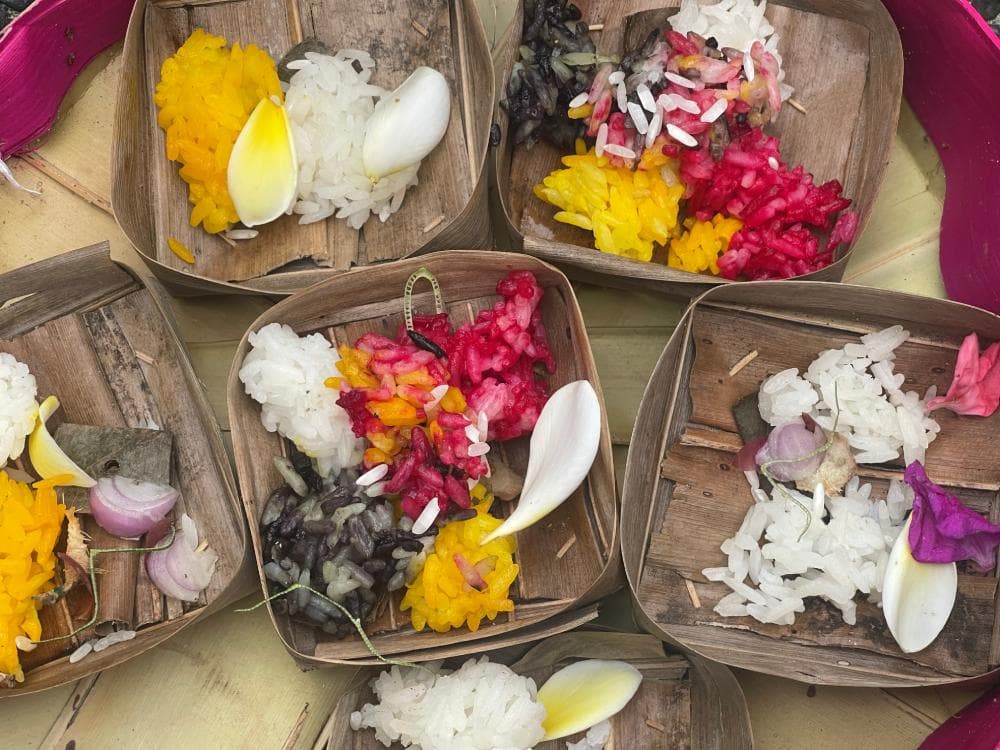
The Balinese people, most of whom follow the Hindu religion, are never separated from yadnya ceremonies in their daily lives, which occur continuously for various purposes and functions. Each yadnya requires a specific banten or offering, and one of the simplest and smallest offerings—contrary to the misconception that Balinese ceremonies involve excessive use of materials—is segehan, which the Balinese prepare daily to appease the bhuta kala.
Segehan comes from the Old Javanese language ‘sega’, which means 'rice'. However, it is also believed that the word originates from the Balinese term ‘segeh’, which means 'welcoming'. Thus, this offering means 'presenting something to a distinguished guest’.
Mengaturang segehan symbolises the act of presenting offerings to bhuta kala to ensure they do not cause disturbances, as well as to purify and neutralise negative influences resulting from human thoughts, speech, and actions. The bhuta kala are considered the lower forces, the negative or disruptive spirits that can do harm if provoked or neglected.
These offerings are typically presented daily and placed in various locations, such as the corners of family shrines (merajan), temple courtyards, house entrances, and road intersections. Each offering consists of a simple base made from banana leaves or young coconut leaves (janur), containing rice in various colours. Moreover, a fire source known as 'api takep' (created by crossing two pieces of coconut husk) is used instead of incense. Sometimes other elements are included, such as basic condiments like shallots, ginger and salt, as well as liquid offerings such as water, palm wine (tuak), arak, and fermented rice wine (berem).
In general, there are several types of segehan: Segehan Kepel Putih, made from white rice and commonly offered on a daily basis; Segehan Putih Kuning, in which one portion of rice is coloured yellow; Segehan Kepel Manca Warna (Five Colours), which consists of five different rice colours—white, red, yellow, black, and a combination—each placed in a specific direction; Segehan Wong-Wongan, which resembles the form of a human and is used to prevent disaster; and Segehan Agung, the most complete segehan, used in major ceremonies.
Read Next

Holy Offerings: The Real Life Practice of 'Yadnya'
Bali’s Nunas Sabeh Mapag Toya ritual seeks rain and balance, as young farmers replant banyan trees to address water scarcity amid tourism growth.
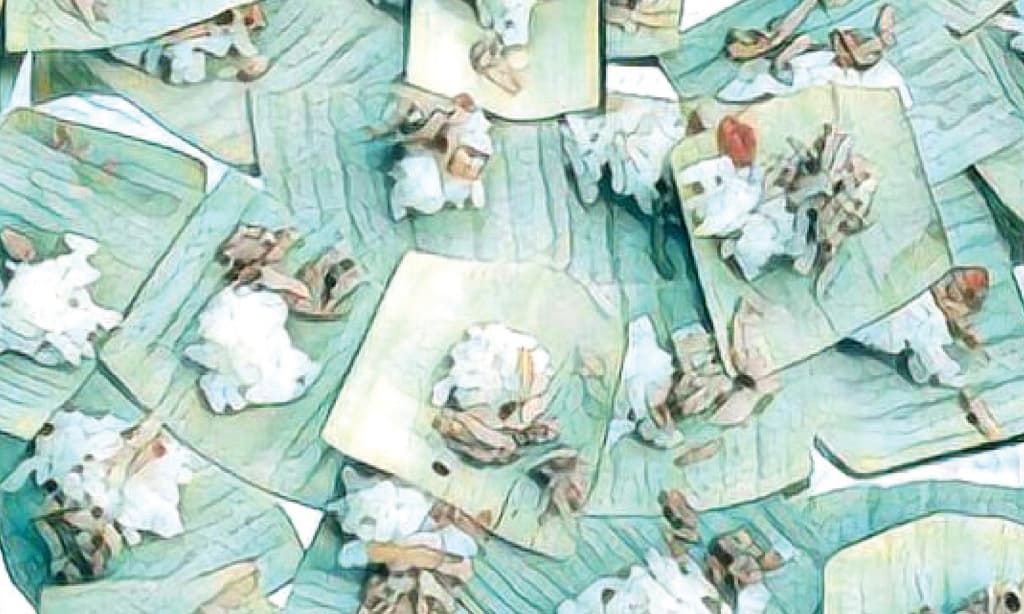
Banten Jotan: An Offering for Good and Evil
Banten Jotan, Bali’s daily food offering, symbolizes gratitude and balance between gods and demons, reflecting the island’s deep spiritual traditions.
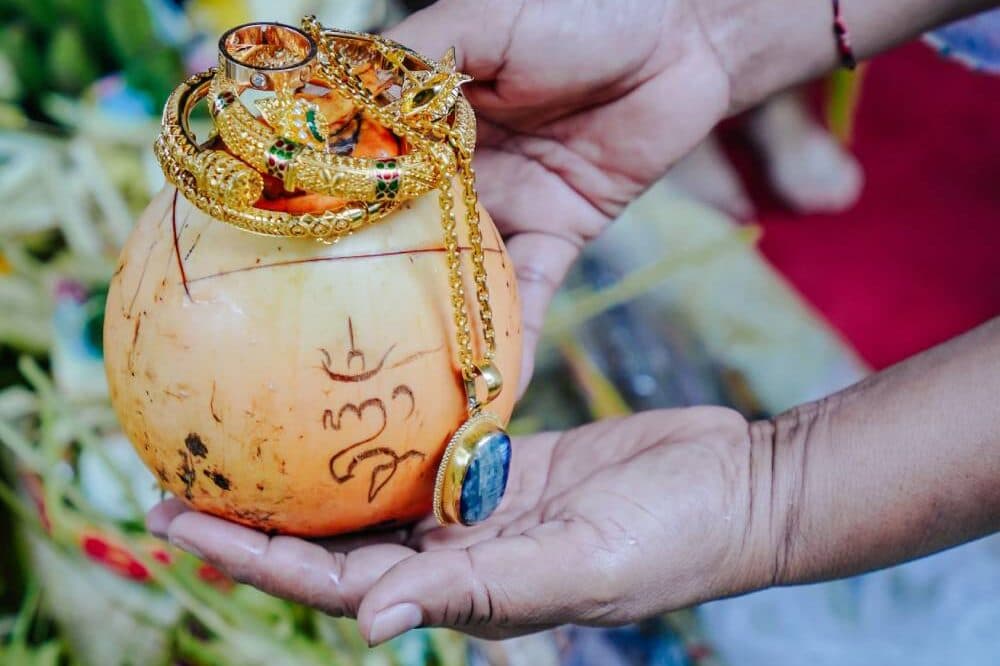
Bungkak Nyuh Gading: A Vessel of Purity in Balinese Rituals
Bungkak nyuh gading are sought out specifically for their waters, known locally as air langit, or heavenly water.

Canang Sari : Bali's Daily Offering
Canang sari, Bali’s daily Hindu offering, embodies gratitude and devotion with symbolic colors, flowers, and incense carrying prayers to the divine.

Bija: Blessed Grains of Rice
Grains of rice seen stuck to the forehead and necks of worshippers is called bija, and signifies being in a state of holiness.
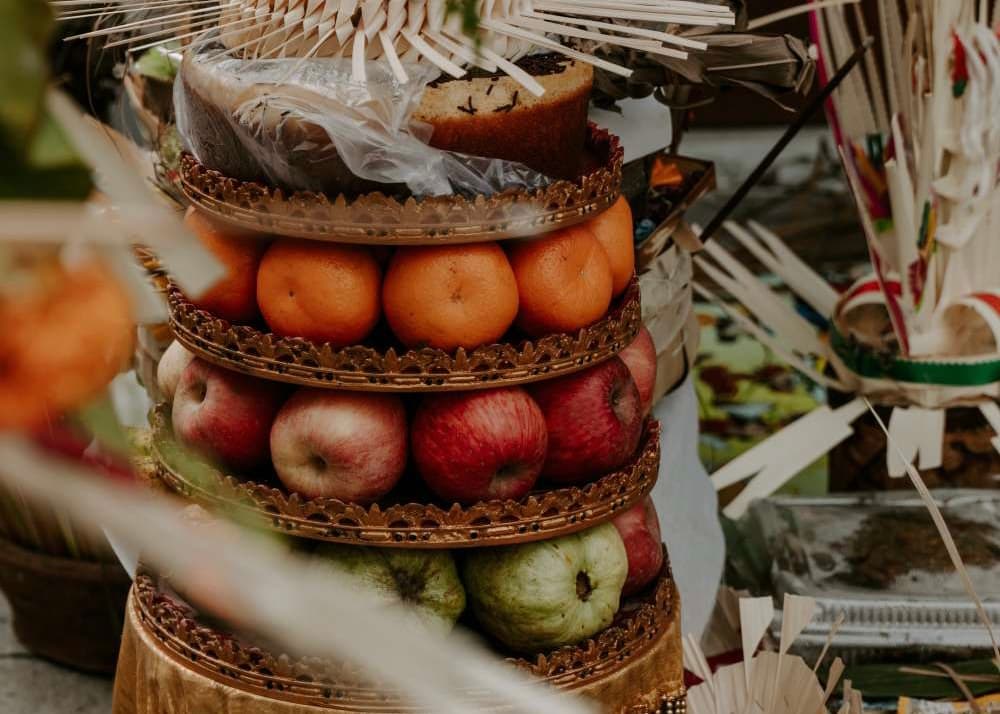
Gebogan Bali, The Vibrant Towered Offering
The Gebogan is one of Bali’s most eye-catching offerings, tall and colourful, with various fruits and flowers arranged into a tower.