
Bija: Blessed Grains of Rice
Grains of rice seen stuck to the forehead and necks of worshippers is called bija, and signifies being in a state of holiness.

Upon leaving the temple, grains of rice are often seen stuck to the forehead and necks of worshippers, both on women and men. This particular rice is called bija, and signifies being in a state of holiness.
During worship ceremonies, Balinese Hindus not only receive tirta (holy water, referred to as nunas tirta), but also bija (referred to as nunas bija, mebija, or mewija). The term "Bija" or "Wija," derived from Sanskrit, translates to "seeds." These grains are revered for their sacred significance, symbolising spiritual seeds within the worshipper.
Bija serves as a symbolic representation of Kumara, the son of the God Siwa. Kumara symbolises the essence of Siwa's divinity in every individual. Receiving the grains of rice, in this context, embodies the nurturing and growth of divinity within oneself. Hence, the use of unbroken rice grains is advised for bija, as broken grains are deemed incapable of 'sprouting' the divine essence.
Bija is made from rice grains that are cleansed with clean water or sandalwood water. At times, turmeric is added to give it a yellow colour, resulting in what is known as bija kuning, or yellow bija. The yellow bija plays a ceremonial role and is typically used during ngaben, a Balinese Hindu cremation ceremony.
Bija is made from rice grains that are cleansed with clean water or sandalwood water.
Typically, the intricate ceremonial attire poses challenges for the placement of bija on every intended spot. As a result, attention is only focused on three specific locations: Anja Chakra, positioned slightly above and between the eyebrows, known as the third eye; Vishuddha Chakra, located on the neck just outside the throat, aiming to bring happiness and spiritual clarity to the worshipper; lastly, bija is swallowed directly without chewing as to not break the grains, symbolically representing growing and developing divine qualities within humans.
Read Next
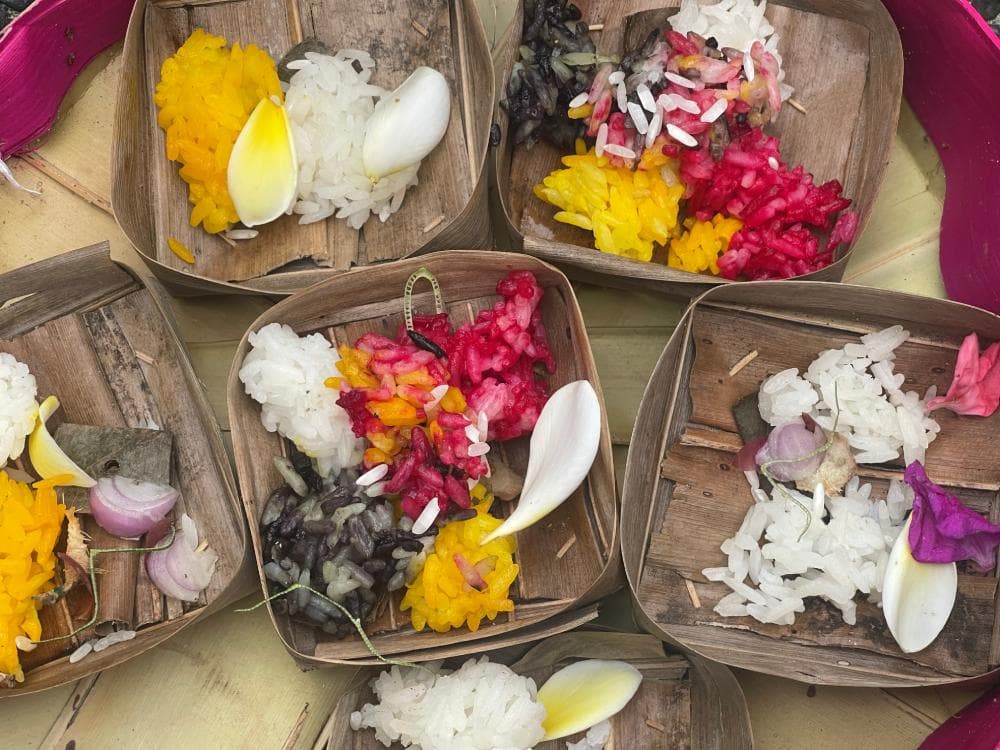
Segehan: Offerings for the Bhuta Kala
Segehan offerings consists of a simple base made from banana leaves or young coconut leaves (janur), containing rice in various colours.
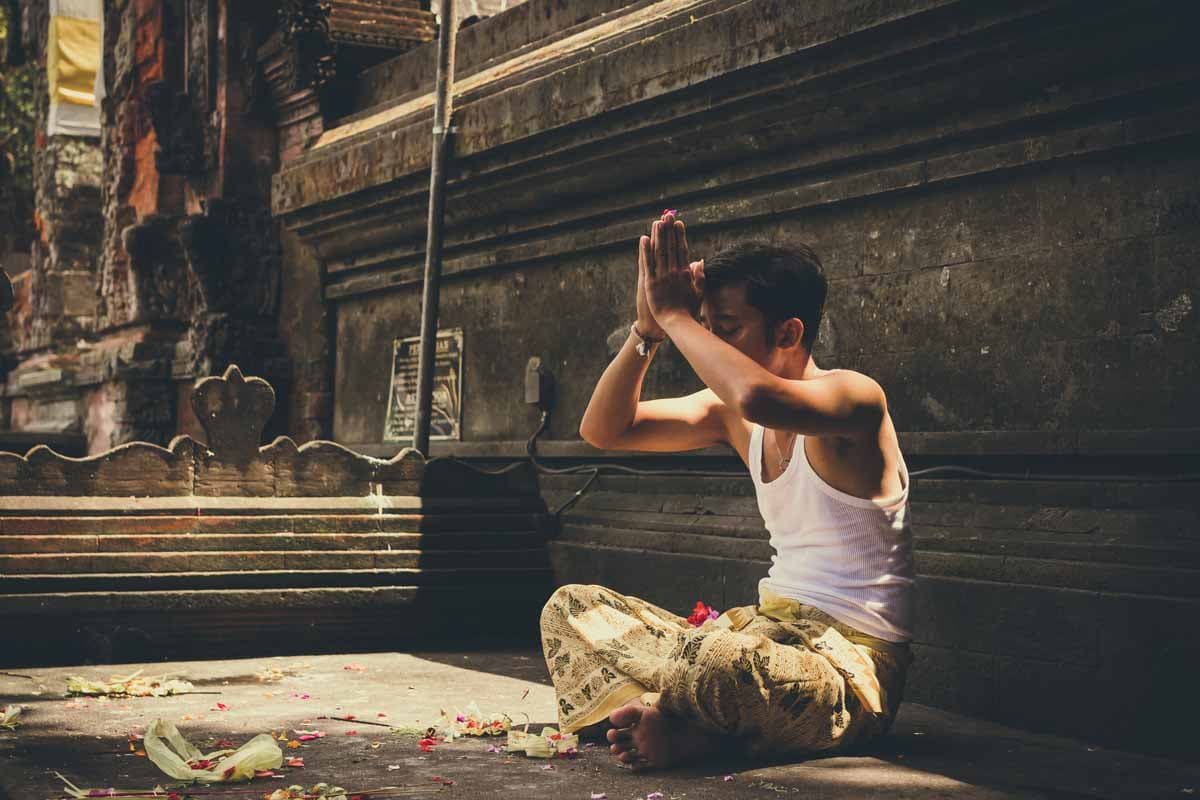
Tumpek Uduh: Balinese Hindu Honour Their Plants
Balinese Hindus has numerous religious ceremonies held throughout the year, one of them is Tumpek Uduh, a day of honouring plants.
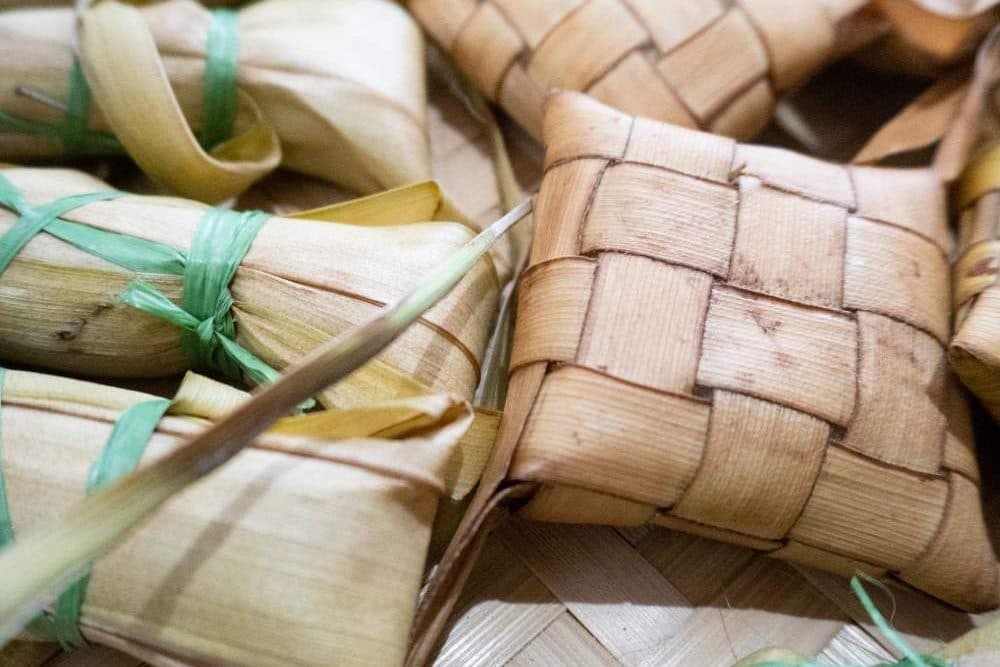
Tipat and Bantal: Symbols of the Feminine and Masculine
Tipat and bantal are two elements that hold profound symbolic meaning within the context of Balinese Hindu beliefs and culture.
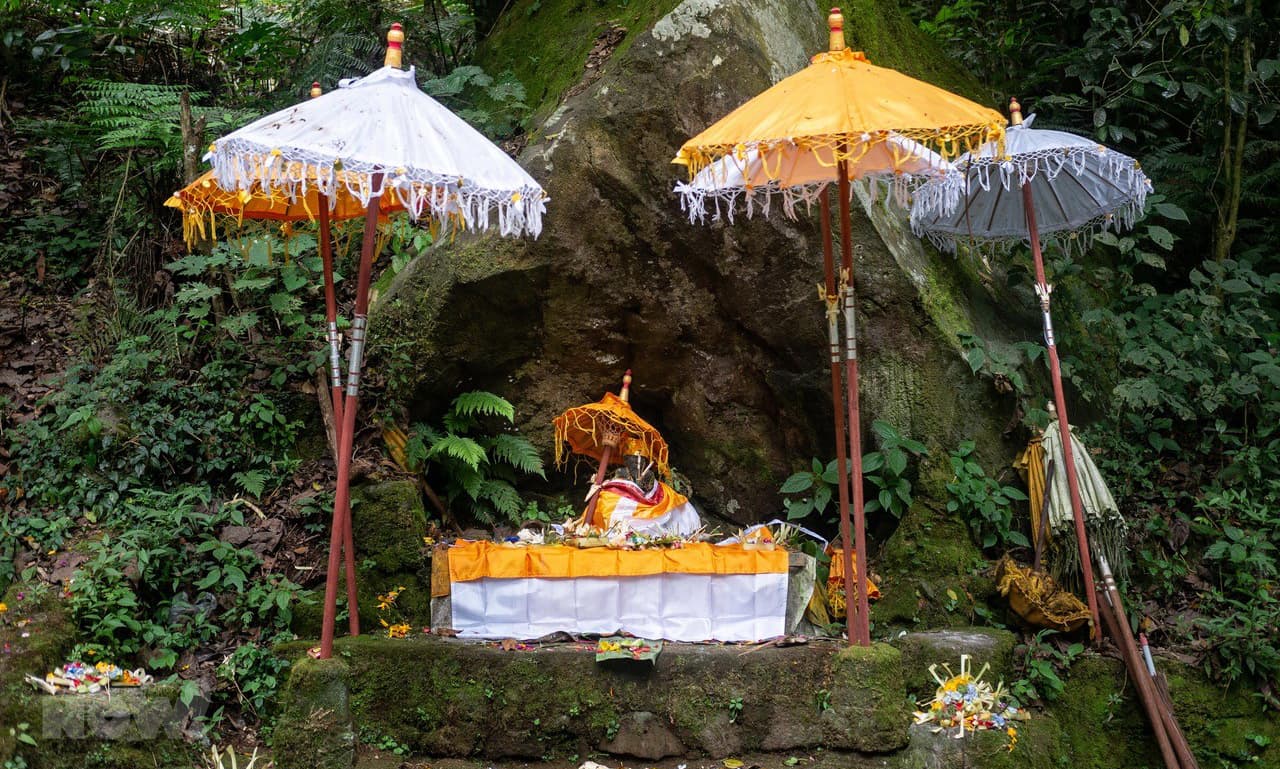
Tedung : Bali's Ceremonial Umbrella
Tedung, Bali’s ceremonial umbrella, symbolizes protection and spirituality, shading worshippers, holy artefacts, and processions with sacred meaning.
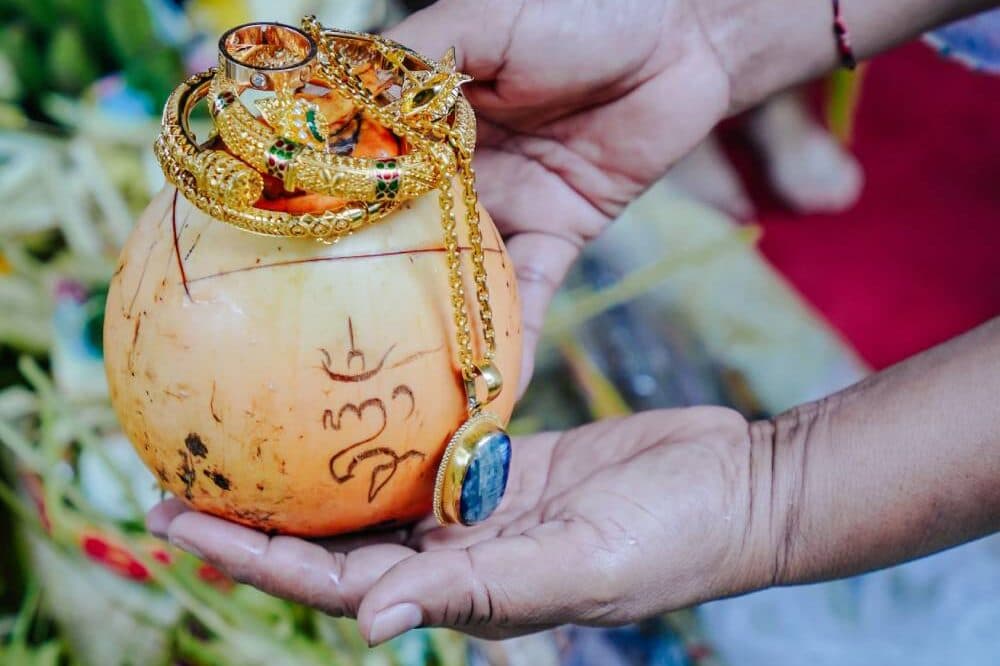
Bungkak Nyuh Gading: A Vessel of Purity in Balinese Rituals
Bungkak nyuh gading are sought out specifically for their waters, known locally as air langit, or heavenly water.
Gayah: Bali’s Intricate Meat Offerings
Both unsightly and impressive, gayah are intricately-prepared offerings fashioned out of the meat, skin and parts of butchered pigs.