
Lamak: Sacred Palm-Leaf Decorations
Lamak is an impressive palm leaf “tapestries” that decorate shrines, altars and even people during auspicious days and ceremonies.
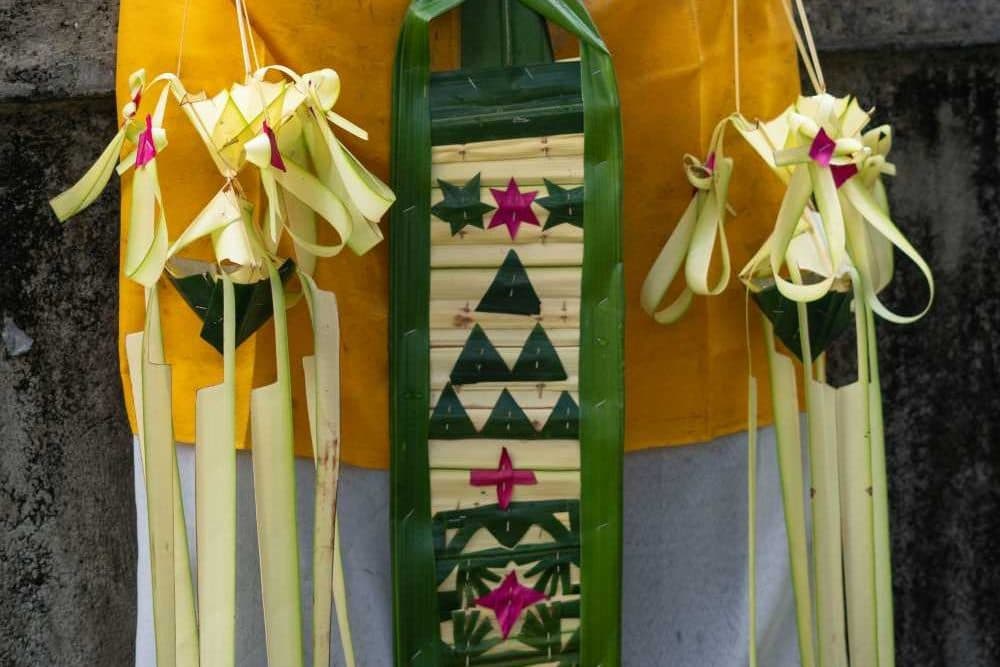
Often overshadowed by the piles of colourful offerings piled on top of them, it can be easy to miss the impressive palm leaf “tapestries” that decorate shrines, altars and even people during auspicious days and ceremonies. These colourful hanging accoutrements are called lamak, and serve as a foundation for offerings to attract deities and revered ancestors.
As if the Balinese could not find enough uses for the palm leaf, the lamak showcases yet another way the artistic spirit shines in worship and ceremony. Long and rectangular, the lamak is a sheet made predominantly of young and old palm leaves, one face decorated with intricate motifs made of coloured leaves, cut, shaped and pinned. A lamak is used a foundation or a ‘base’ for offerings: the top of the lamak (which has no motif) is often tucked under the offering baskets or piles of canang sari, allowing its decorated face to hang gloriously down the front of the shrine. Otherwise, they may be pinned to the front of altars, also hanging down to showcase its motif.
Though they are considered offerings themselves, the lamak functions as an invitation, sign or even pathway (lantaran) to visiting deities, spirits and ancestors, directing them towards the offerings that have been laid out for them. They indicate, through decoration, which shrines and altars have new gifts. They also serve as a separation between the offerings from the profane materials upon which they may be placed, like a holy table mat.
Lamak vary heavily in length. They may be no longer than 30cm, pinned to the make-shift shrine of a penjor bamboo pole during Galungan festivities; or they may sprawl over 10m down from the very top of the Padmasana shrine in the temple. The imagery of a lamak may include a mountain, vegetation and trees (especially the depictions kalpataru, the tree of life), and a female figure known as cili, who symbolises fertility and prosperity.
Some consider this sacred decoration to be a ladder or a bridge, not only for the essence of offerings to be given to the niskala (unseen) world, but also so that their blessings may be directed into our sekala (seen) world. As such, in some dances and ceremonies, a lamak may be placed on the chest of a dancer or those doing their manusa yadnya ceremonies, acting as a guide and bridge between the two worlds.
Read Next
Tedung : Bali's Ceremonial Umbrella
Tedung, Bali’s ceremonial umbrella, symbolizes protection and spirituality, shading worshippers, holy artefacts, and processions with sacred meaning.
Decoding the Pawukon Calendar: Cycles and Symbolism
The Balinese Pawukon calendar is one of two calendar systems used on the island, but by far the Pawukon dictates much of ritual life on Bali.
Make a Scene Bali: Leaf Weaving in New Dimensions
Bali's leaf weaving craft gets innovated into new dimensions by Make a Scene Bali, a leaf creation studio on the island.
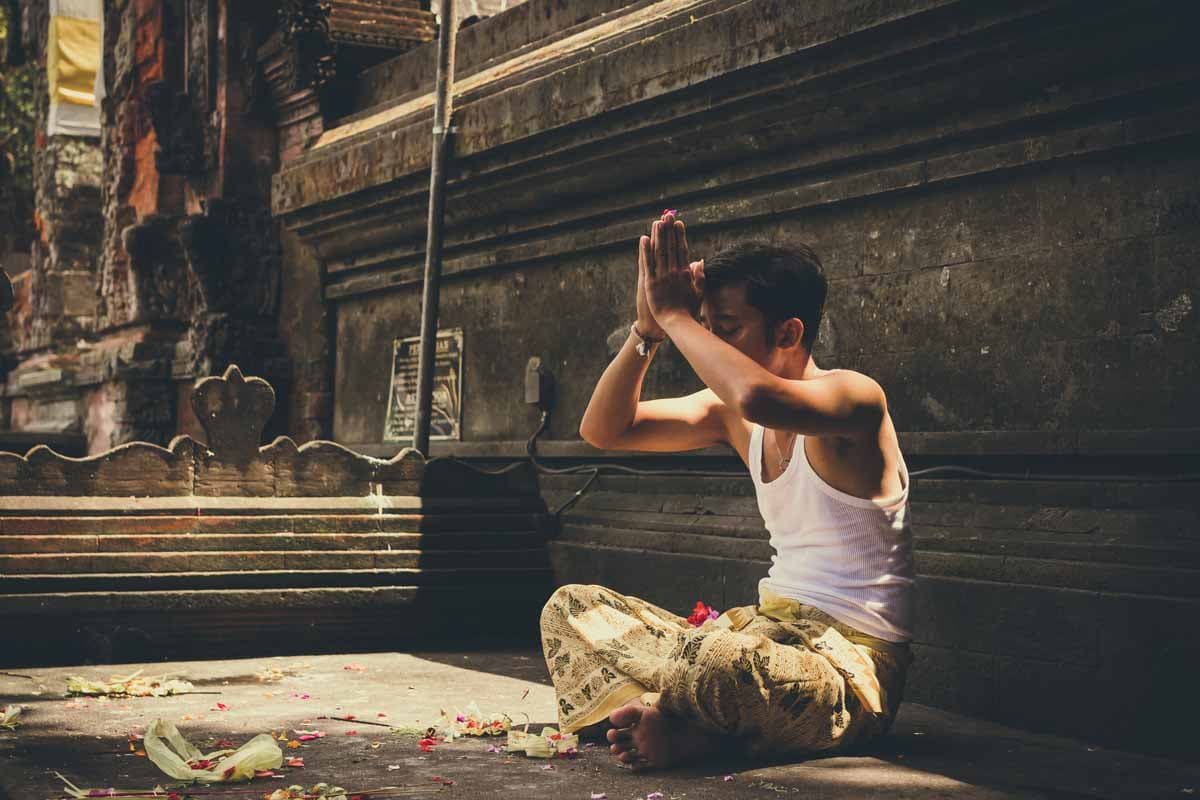
Tumpek Uduh: Balinese Hindu Honour Their Plants
Balinese Hindus has numerous religious ceremonies held throughout the year, one of them is Tumpek Uduh, a day of honouring plants.
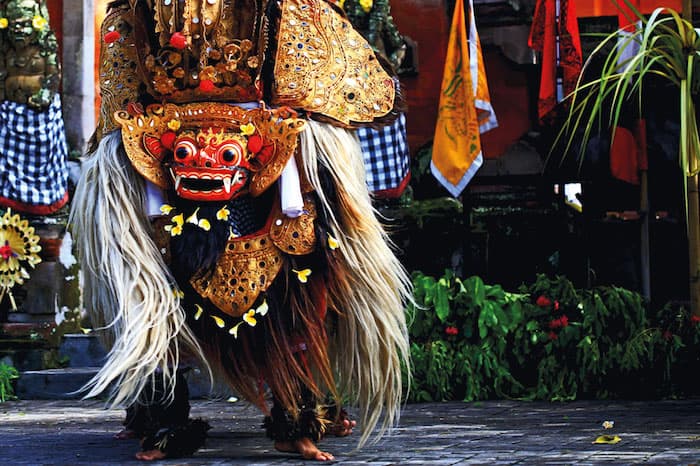
The Sacred Rituals Behind the Barong Dance
The Barong, a character symbolising ‘good’ in Balinese Hindu belief, and therefore a key figure found in certain Balinese dances.
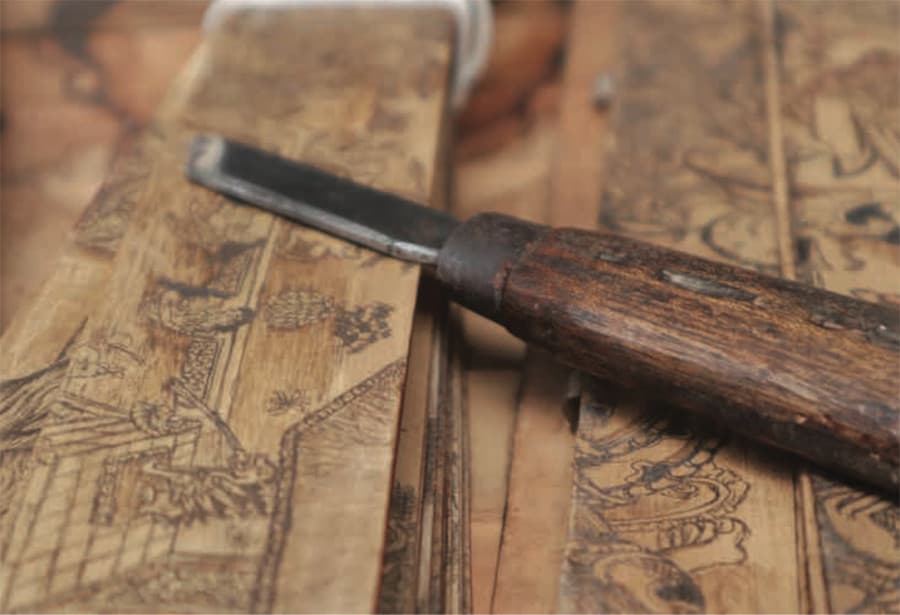
Exhibition Highlights Ancient Lontar, A Balinese Artform of Miniature Manuscripts
Explore the art of ancient Balinese lontar through this exhibition, highlighting traditional miniature manuscripts and modern prasi designs.