
Prana Bhawa : A Dance for the Energy of Life
Prana Bhawa by Seka Gong Kebyar Manggeh Jayengrat at Bali Art Festival blends Balinese dance, gamelan, and Mahabharata stories to showcase vital energy.
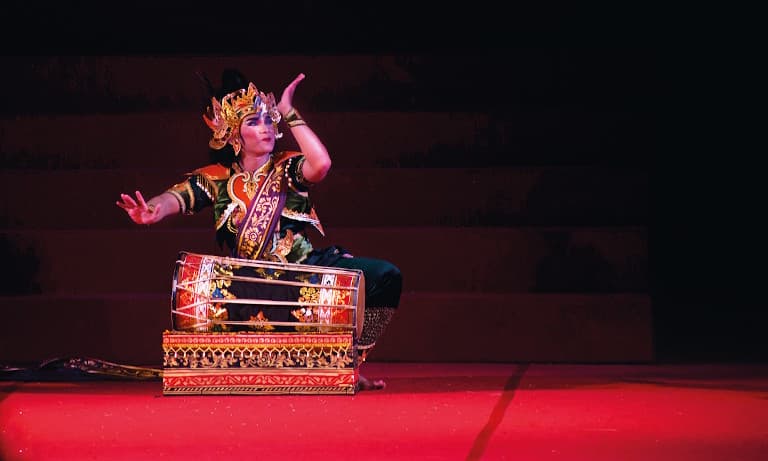
The Balinese have mesmerised thousands with their performing arts. In an age of modernisation and globalisation, where tradition is losing its appeal among the youth, the Balinese continue to find celebration in their heritage arts and culture.
Where this is still seen is in Balinese dance and gamelan (traditional orchestra), which are central components of Balinese life. In the past, dance and music were strictly tied to religion and rituals, a great and humble service to God and ancestors. Although, whilst many performances remain sacred, the discipline has evolved. Artists now channel their own creativity to show new ways of depicting these arts whilst simultaneously spread positive values through them. Principle and core dance routines are thus modified and infused with contemporary styles inspired by world dance, creating brand new performances.
The Seka Gong Kebyar Manggeh Jayengrat dance and gamelan group from Mengwi, a district in Badung regency, is one group that never ceases in their pursuit for new, exciting choreography. They are a prime example of how Balinese dance stays alive and well.
One performance they made and showcased at the Bali Art Festival 2019 was ‘Prana Bhawa’.
One performance they made and showcased at the Bali Art Festival 2019 was ‘Prana Bhawa’.
Prana is seen as the vital energy that flows through every living being. It is the breath of life. Bhwana means incarnation. Together, Prana Bhawa means to incarnate this very vital energy, which this performance portrays. The costume and the routines are brought to life by Shri Khrisna, a character of the epic Mahabharata. The performance introduces a variety of musical instruments and play a central role in telling the story. The wind-like sound of the bamboo flute illustrates affection; whilst the drum symbolises the ‘root’, symbol of the divine; and finally the terompong illustrates wisdom.
The performance begins with the lead dancer playing the terompong, a xylophone-like instruments that sounds more similar to a gong. Meanwhile, the gamelan musicians dance, too, behind their own instruments before sitting and playing. Once they play, the deep reverberations of these metallic instruments flow through the room.
Slowly the imposing sounds of the gamelan fade away and are replaced by the more romantic, poetic sounds of the suling, the bamboo flute. A light but almost mellow whistle glides through the night air as a dancer slides onto the stage, also playing a suling.
Finally, after the suling act, the root, the symbol of the divine, takes over. The kendang, Bali’s traditional horizontal drum, beats and beats. Now, three dancers move to the bang of the drum, their feet accentuating the beats as they land on the ground, creating a connection between the music, man and the earth below.
The dance, choreographed by Anak Agung Gede Agung Rahma Putra, was performed by three male dancers, accompanied by 30 musicians. Such performances cement the fact that Balinese philosophy, beliefs and traditions continue to grow and flourish in an age of modernisation.
Read Next
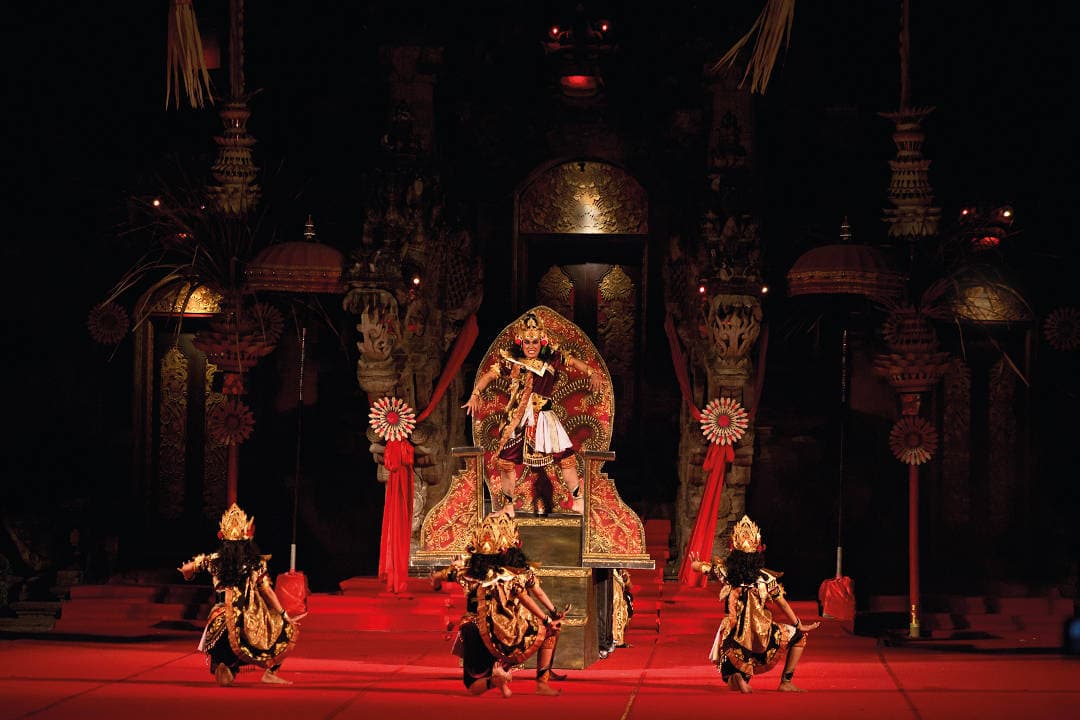
The Kekebyaran Purancak Dance of West Bali
Purancak Dance from Jembrana tells the epic clash between Dang Hyang Nirartha and King Rangsasa through vibrant Kekebyaran dance and gamelan.
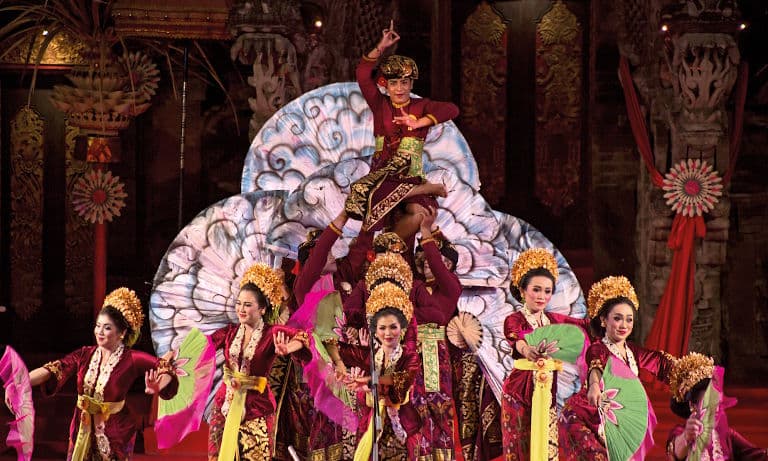
Sandya Gita Kotamaning Bayu
At the Bali Art Festival, Sandya Gita Komaning Bayu dazzled with Balinese dance, gamelan, and kidung, performed by Badung’s talented troupe.
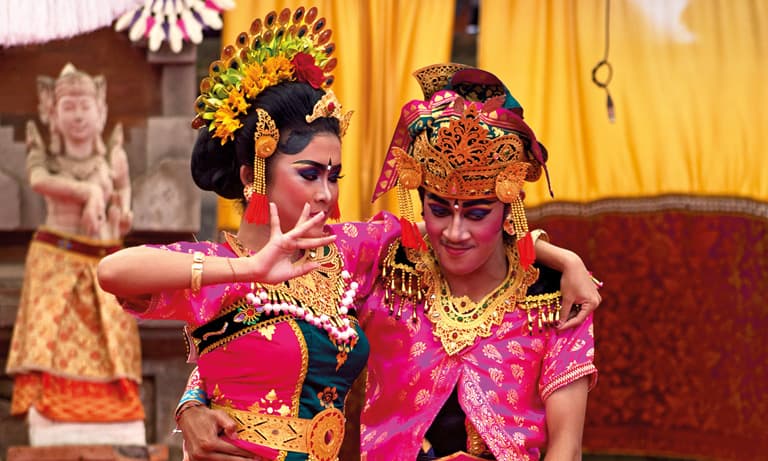
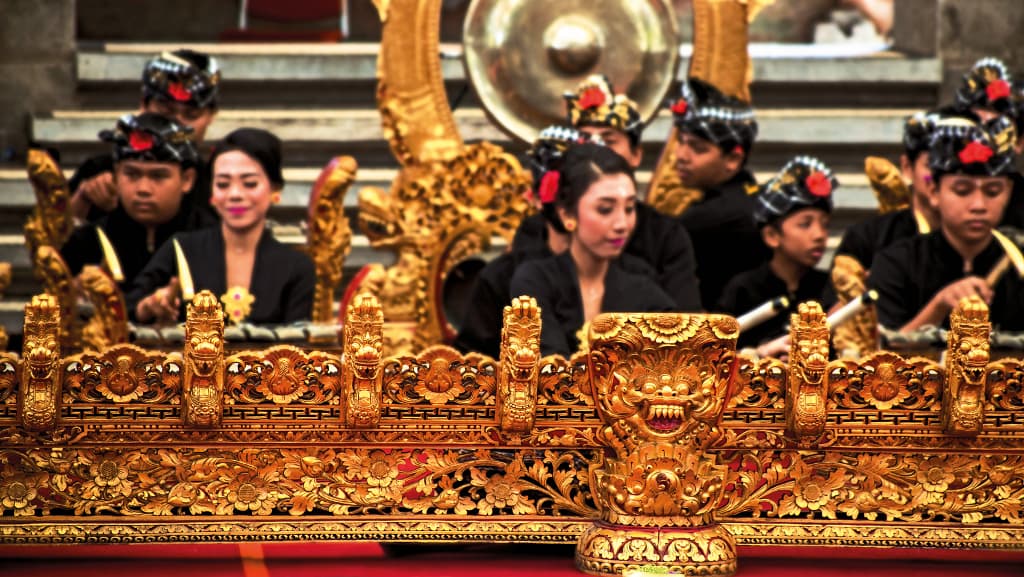
The Spiritual Sounds of the Gamelan
Gamelan in Bali is more than music; it’s the soul of rituals, symbolizin God, passed down for centuries with skilled craftsmen and sacred traditions.
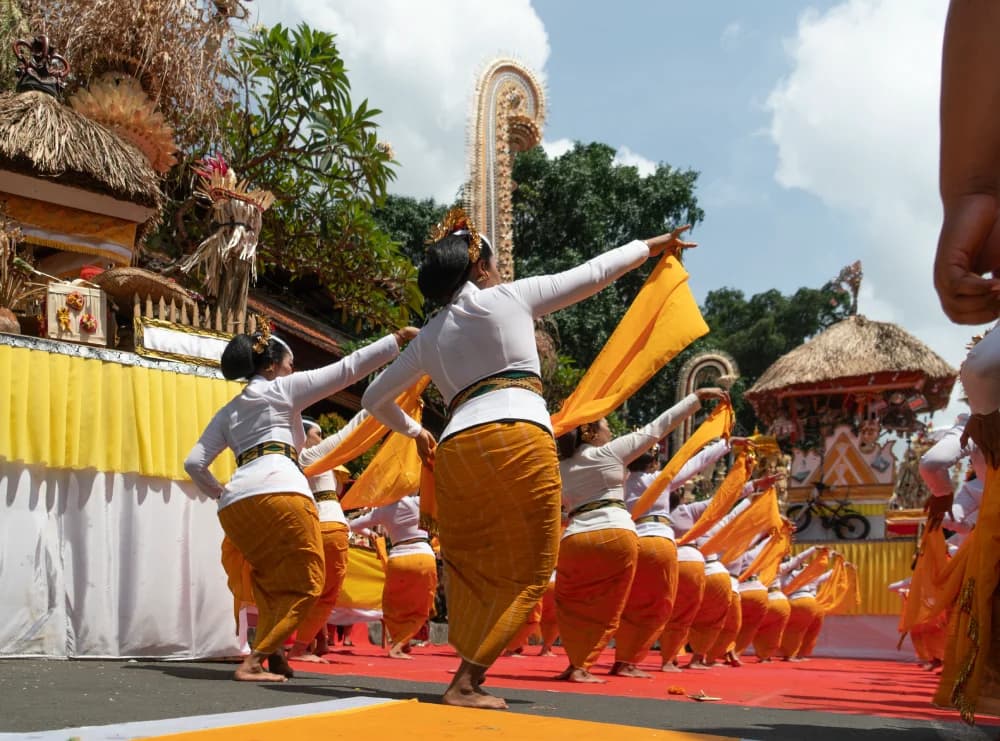
A Beginner’s Guide to Balinese Dance
What are the categories of Balinese dance, and what are the most foundational stances? This is your guide to Balinese dance.