
Kwangen: Bali’s Fragrant Offering
Kwangen comes from the word 'wangi' and can be interpreted as something fragrant used to worship Ida Sang Hyang Widhi Wasa (Almighty God).
Balinese people are known for their meticulous attention to detail in their worship practices. There is a ceremony for so many aspects of life in Bali, and each ceremony will have very specific requirements. This is particularly true when it comes to certain rites and offerings, all must be executed with precision, all items present! One mandatory item in worship is the unique kwangen offering.
Kwangen comes from the word ‘wangi’, which means fragrant or aromatic. Therefore, kwangen can be interpreted as something fragrant used to worship Ida Sang Hyang Widhi Wasa (Almighty God) and all of God’s subsequent manifestations.
Kwangen is mentioned as a symbol of "Om Kara" or “Ongkara” which is a sacred syllable or pranawa symbolising God. This aims to emphasise that God is beautiful, holy, and fragrant, thus should be worshiped and revered.
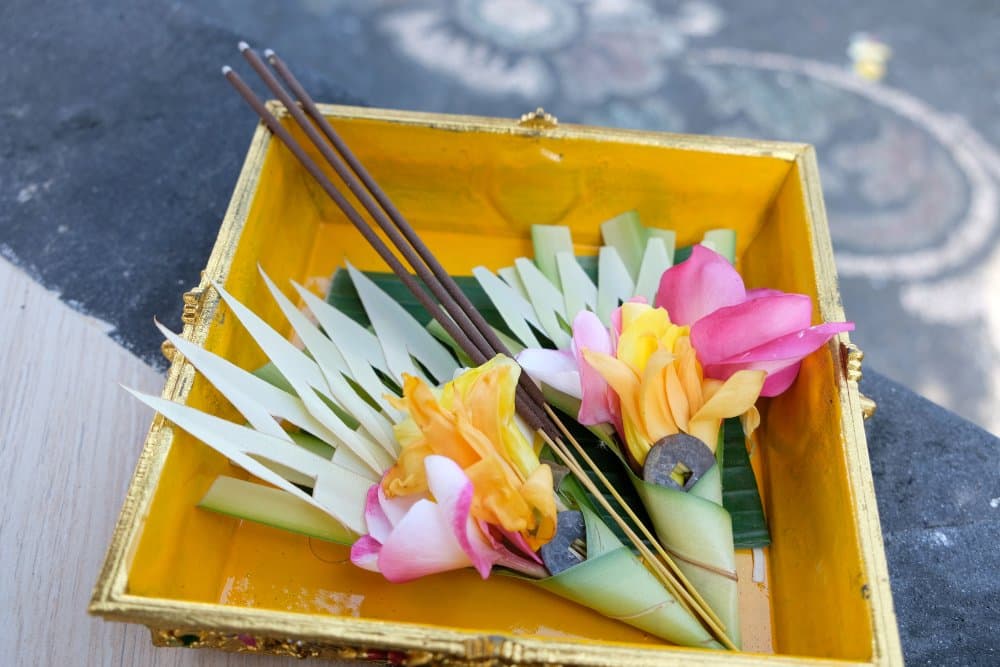
The shape of this offering is small and triangular, an intricate and beautiful display that somewhat resembles a bouquet. The bottom is pointed, and its top looks like a blooming flower. Its fragrant smell comes from the various flowers filled inside the offering.
The shape of this offering is small and triangular, an intricate and beautiful display that somewhat resembles a bouquet.
The kwangen is made of six components: a kojong, a cone-like vessel made from banana leaves; a pis bolong, a holed coin; a plawa, or leaf; a porosan silih asih, or betel leaves tied together; a sampian, fan-like shape depicting cili made from coconut leaves; and fragrant flowers like pacah (water jasmine), frangipani, and sandat (ylang-ylang).
To make this fragrant offering, at first the banana leaves must be formed into a kojong. Then, each of the components will be arranged inside of the kojong to form a complete kwangen. Each kwangen component has a symbolic meaning as it is offered to the gods as a symbol of gratitude, devotion, and respect.
Read Next
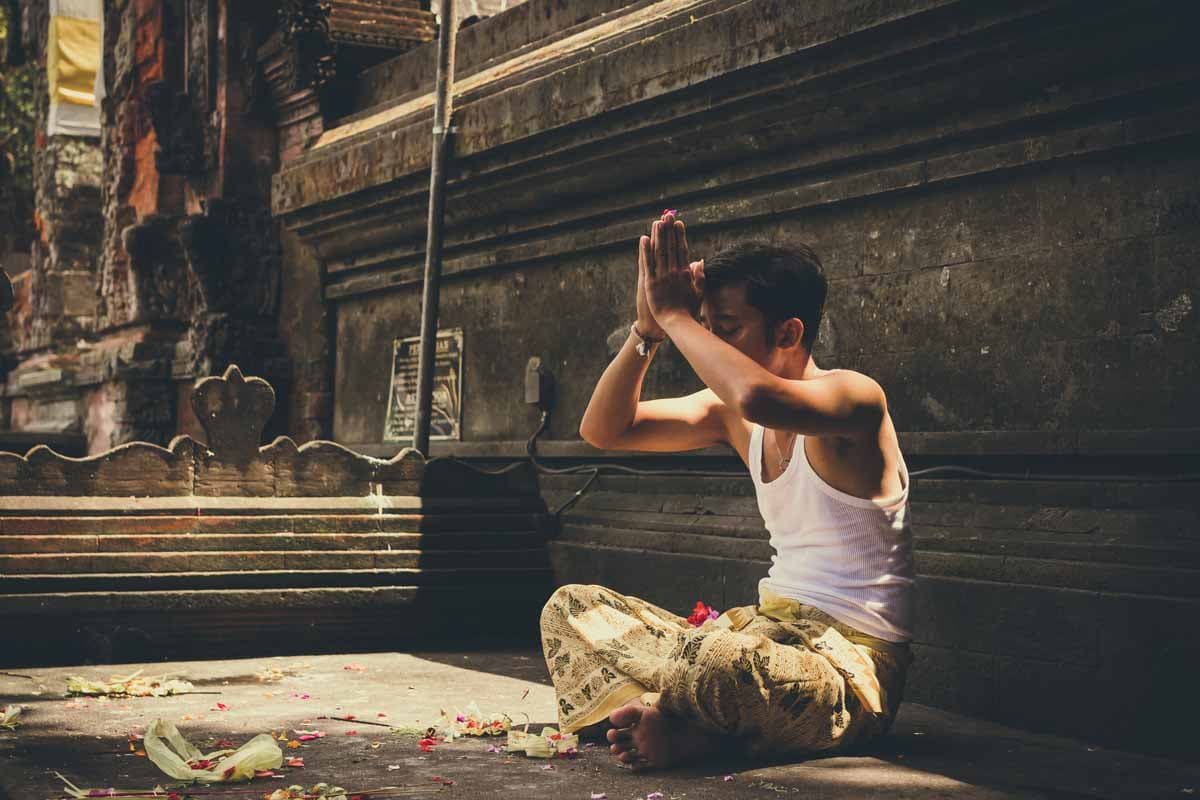
Tumpek Uduh: Balinese Hindu Honour Their Plants
Balinese Hindus has numerous religious ceremonies held throughout the year, one of them is Tumpek Uduh, a day of honouring plants.

Canang Sari : Bali's Daily Offering
Canang sari, Bali’s daily Hindu offering, embodies gratitude and devotion with symbolic colors, flowers, and incense carrying prayers to the divine.
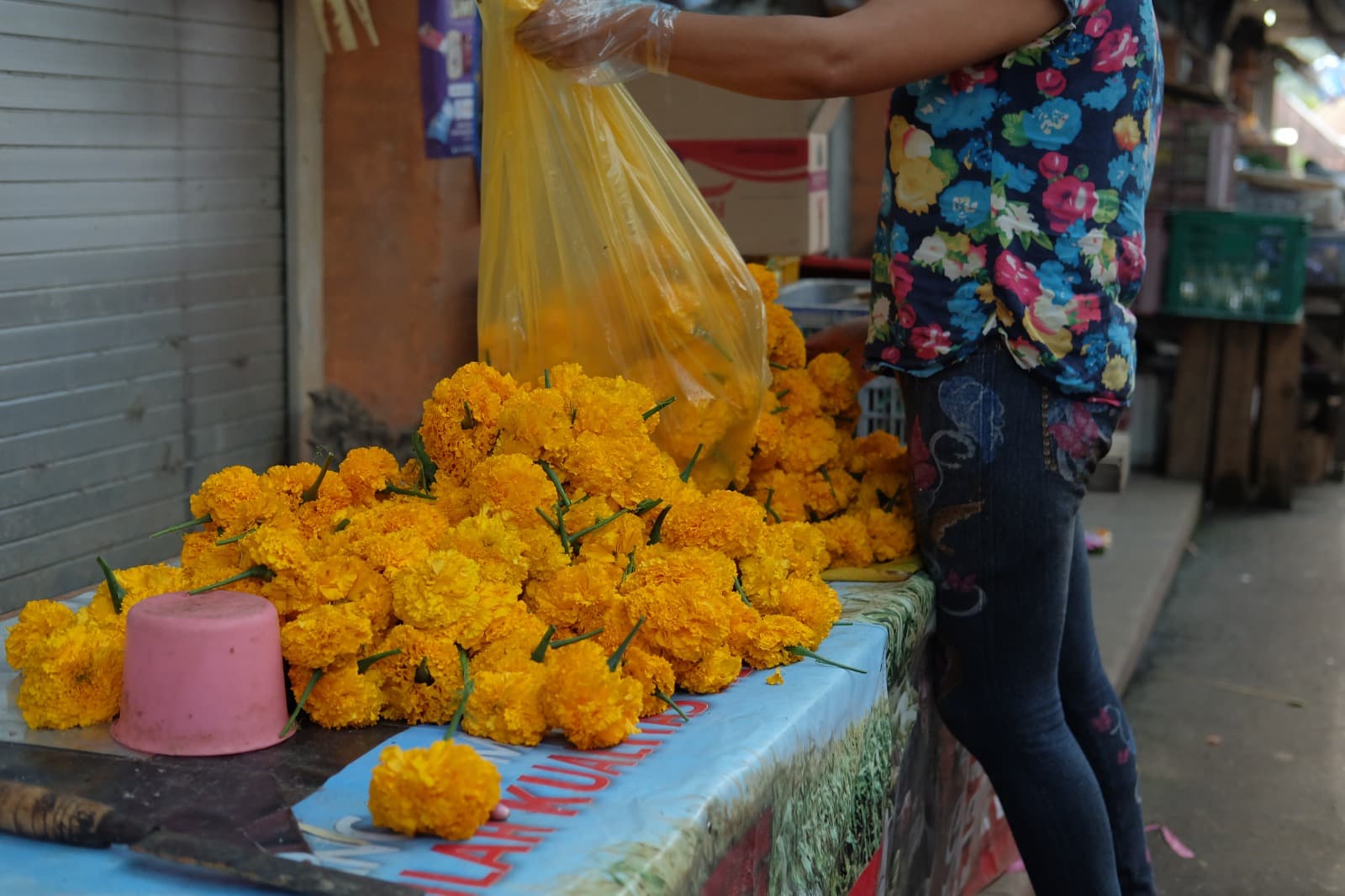
The Flowers of Bali: A World of Symbolism and Colour
The flowers of Bali are part of a world full of symbolism and tradition. Explore a Balinese flower and its meaning.
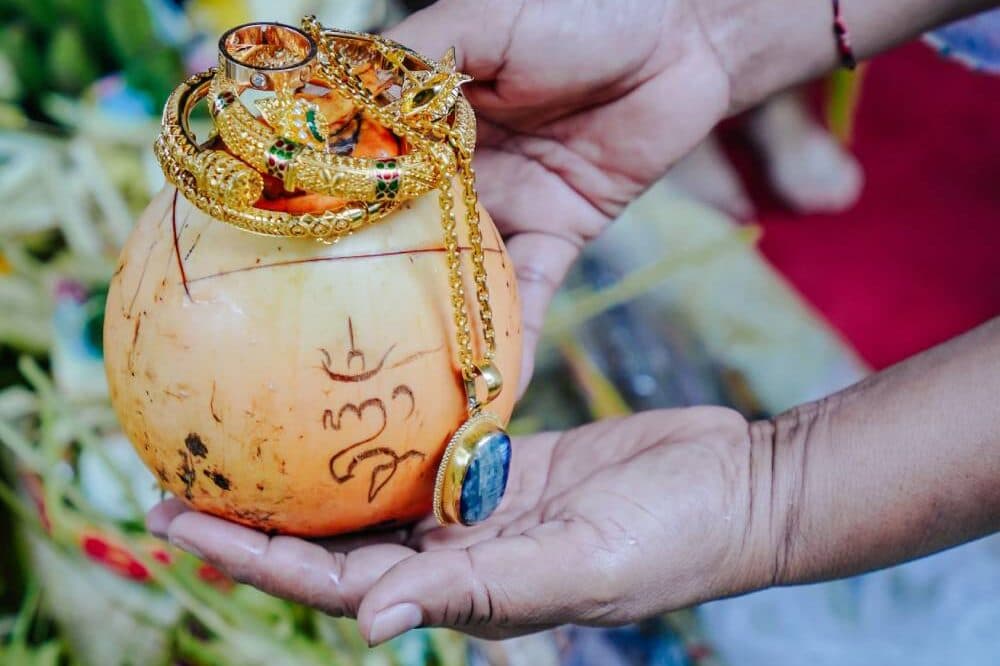
Bungkak Nyuh Gading: A Vessel of Purity in Balinese Rituals
Bungkak nyuh gading are sought out specifically for their waters, known locally as air langit, or heavenly water.
Ulap-Ulap: The Protector of Balinese Buildings
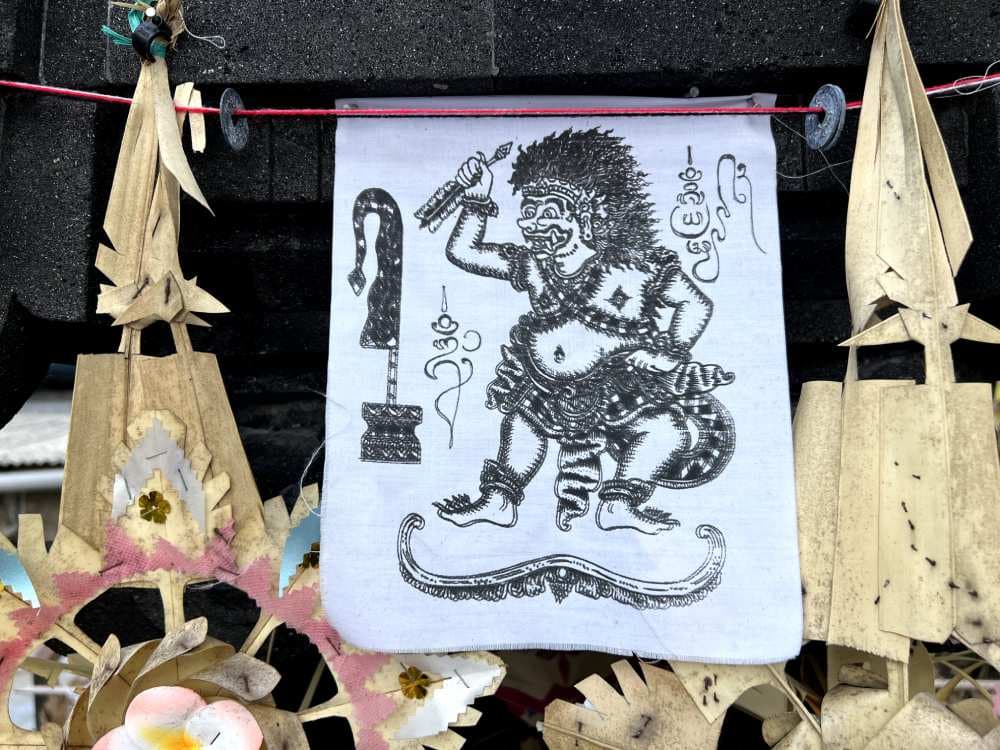
Found hanging at the front of Balinese building is ulap-ulap, these ink drawings on white cloth serve to ward off misfortune.
UMAH Living: The Scents of Bali in Your Home
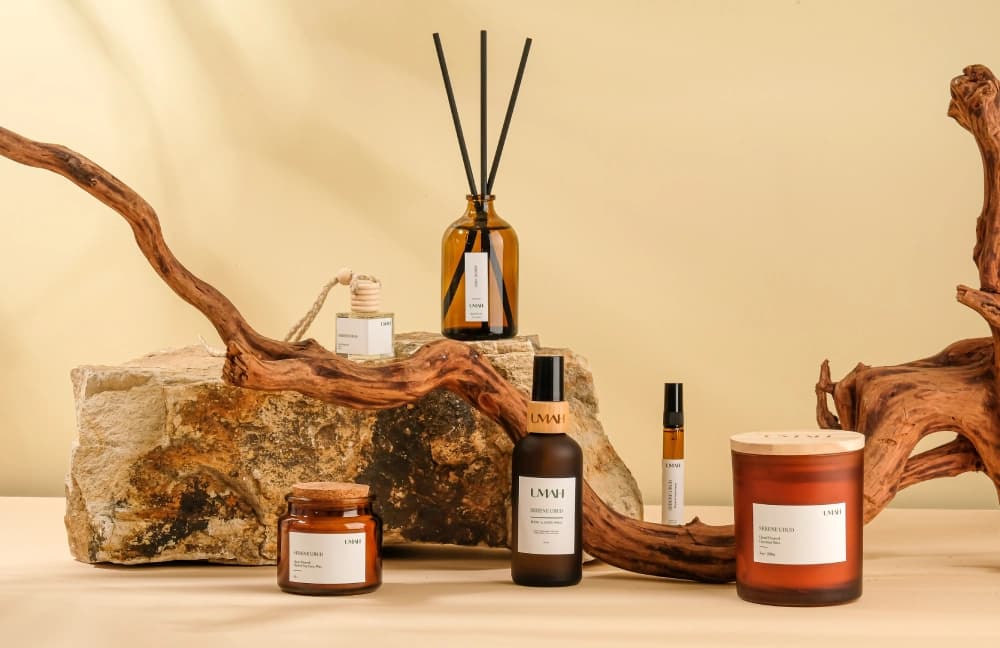
UMAH Living crafts luxurious natural home fragrances inspired by Bali, from candles to diffusers, bringing island serenity into every home.