Pura Penataran Sasih and The Moon of Pejeng
This is Pura Penataran Sasih, recognised as a cultural heritage site largely due to the presence of the 'Bulan Pejeng' or Pejeng Moon.
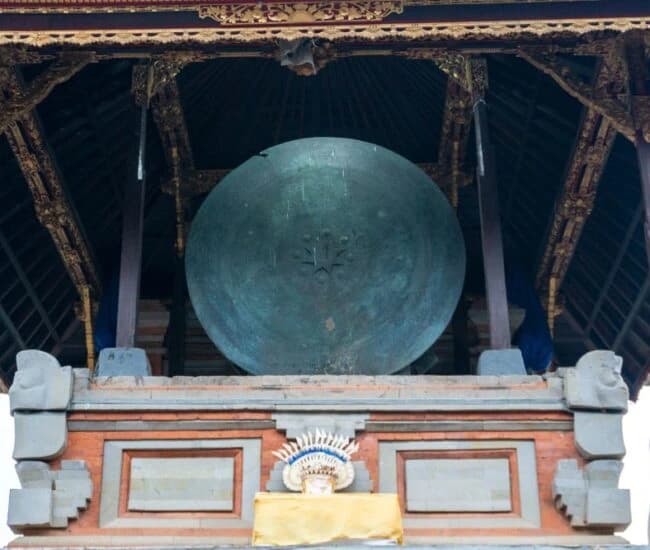
Found along the roadside in the village of Pejeng is said to be one of the oldest temples in Bali. It is home to a relic from the Bronze Age, a bronze drum, believed to have illuminated the village of Pejeng in ancient times.
This is Pura Penataran Sasih, which was founded in 1266 AD and served as the state temple of the Pejeng Kingdom from 1293 to 1343 AD. The temple complex comprises five areas: the main temple, Pura Taman Sari, Pura Ratu Pasek, Pura Bale Agung to the north and Pura Ibu to the south.
Within the main temple, various shrines can be found, including the Padma Kurung building at the entrance of the central courtyard, which houses Sang Hyang Jaran. The temple is celebrated for its collection of ancient statues depicting Ganesha, Balinese Hindu gods and goddesses, Dwarapala (the doorkeeper) and Lingga-Yoni, a symbol of masculine and feminine energy that represents the essence of fertility in life.
Pura Penataran Sasih also boasts a vast collection of stone inscriptions in Kawi and Sanskrit. The inscriptions are believed to be date back to the 9th or 10th century, though they are illegible due to age and weathering. However, this ancient temple is recognised as a cultural heritage site largely due to the presence of the 'Bulan Pejeng' or Pejeng Moon. The name "Penataran Sasih" derives from this relic, with "Penataran" meaning offerings and "Sasih" meaning moon.
Pura Penataran Sasih also boasts a vast collection of stone inscriptions in Kawi and Sanskrit.
The Pejeng Moon is a large cylindrical object, measuring 186.5 cm, with a design featuring an eight-pointed star at its centre, surrounded by circular patterns. This bronze drum also makes the temple a sacred place of worship for Sang Ratih, the Goddess of the Moon.
According to legend, Pejeng was once illuminated by two moons—one in the sky and one in the village. One night, a thief attempted to commit a crime but was thwarted by the constant light. In frustration, he urinated on the moon, extinguishing its light, a tale known as kencing maling meguna.
Another legend linked it to Kebo Iwa, a renowned Mahapatih of the ancient Balinese kingdom, who is said to have worn it as his subeng (earring). Now, revered by the villagers for its magical powers, the Pejeng Moon was used as a sacred medium to request rain to ensure a bountiful harvest.
Read Next
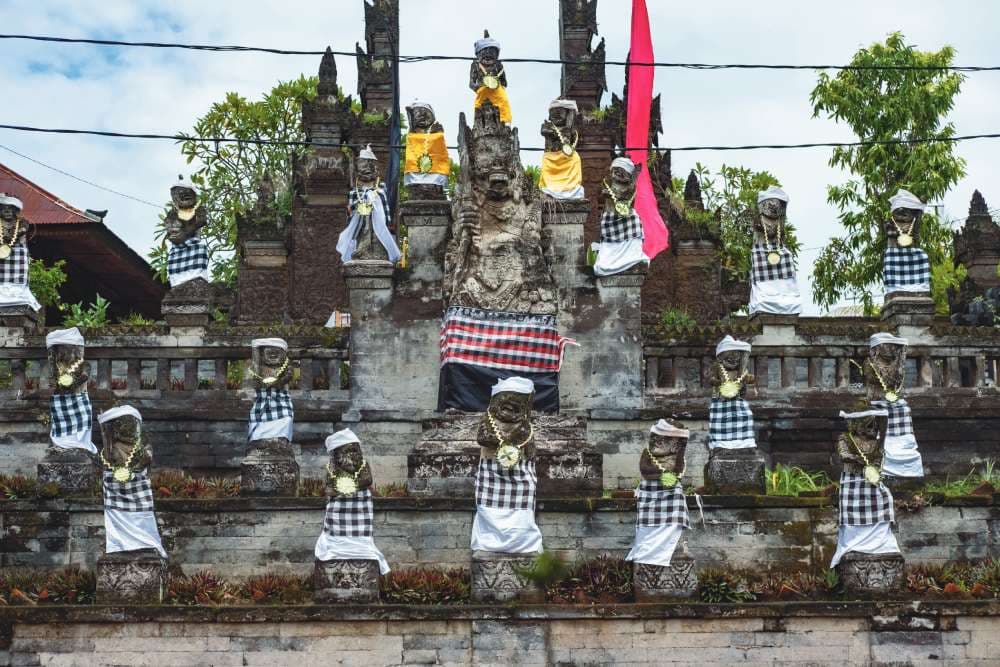
Pura Meduwe Karang: Life Immortalised in Stone
One of the most significant temples in North Bali is Pura Meduwe Karang, where the interest lies in the stories that its walls share.
Pura Pegulingan: Traces of Buddhism in Balinese History
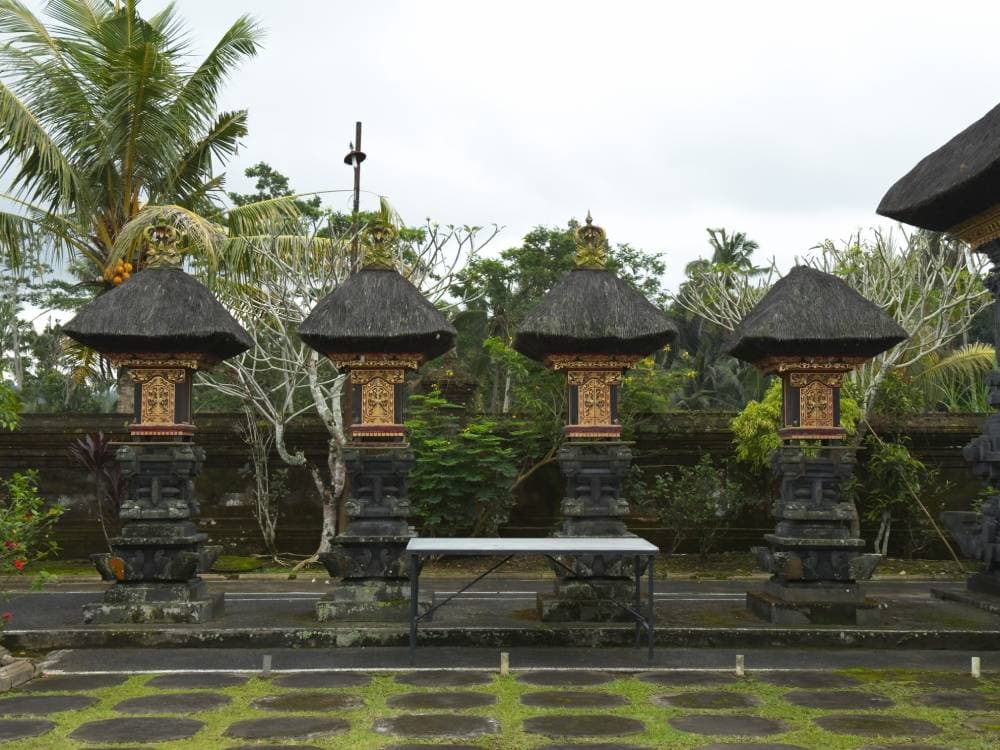
Pura Pegulingan represents a unique fusion of Hindu and Buddhist beliefs, a convergence that dates back to Ancient Bali in the 8th century.
Prasasti Blanjong Pillar: Ancient Inscriptions in Sanur
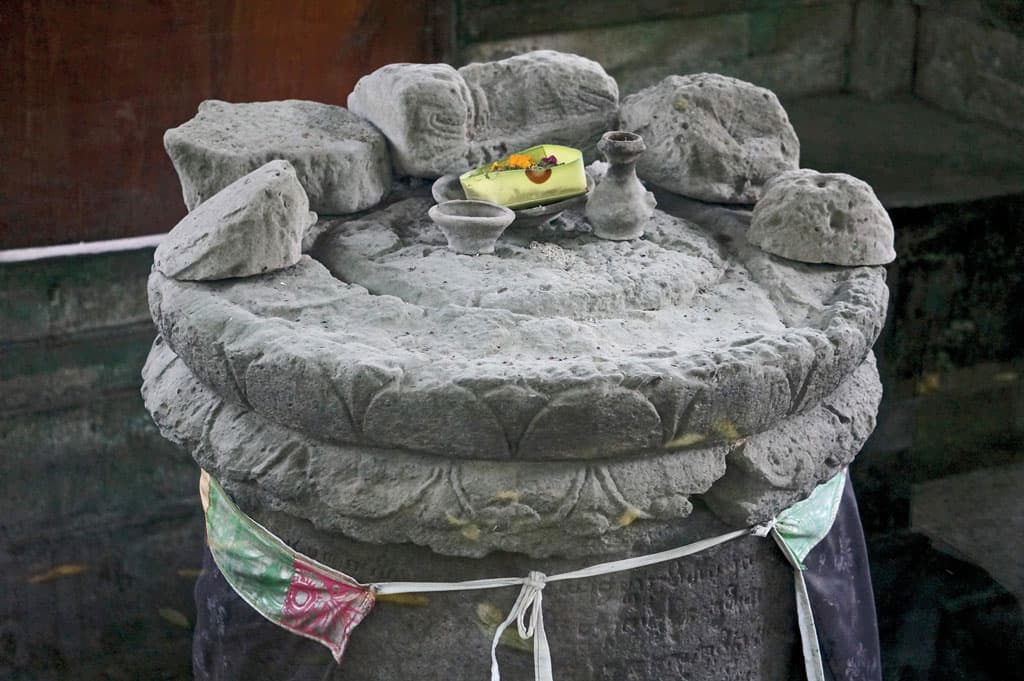
A small monument known as Prasasti Blanjong is the oldest manmade artefact in Bali that dates back to the 9th century that was only found in 1932.
Penjor – Question Marks Against the Sky
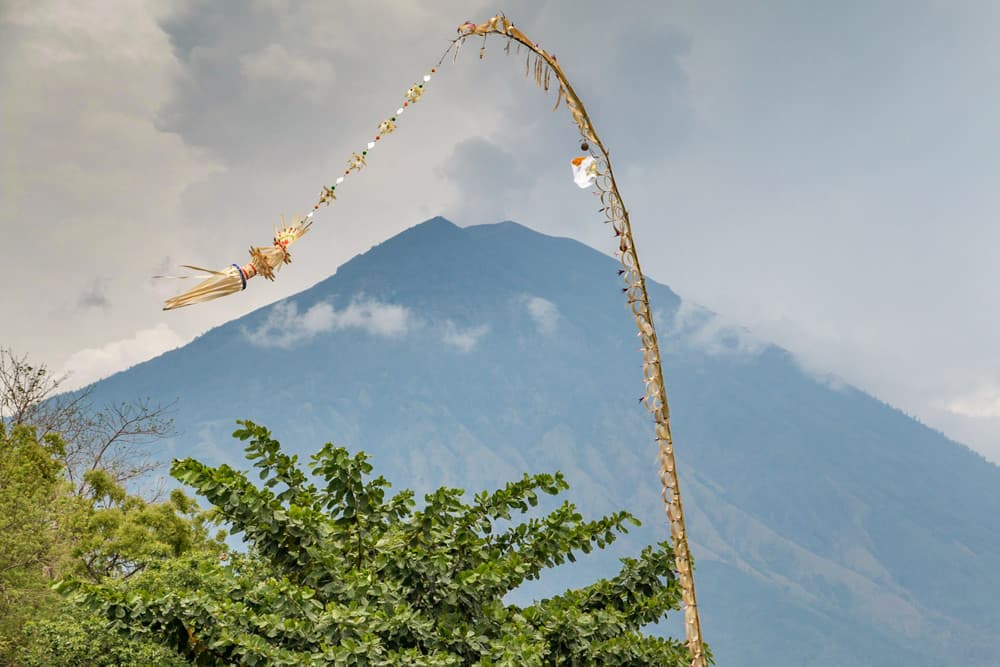
In times of ceremony in Bali you will see many penjor bamboo poles lining the street. They might be beuatiful decoration, but what are they for?