
Pura Puncak Penulisan, A Megalithic Museum
One of Bali’s oldest temples, Pura Puncak Penulisan in Kintamani is thought to be first built in 300 AD during Bali’s bronze age.
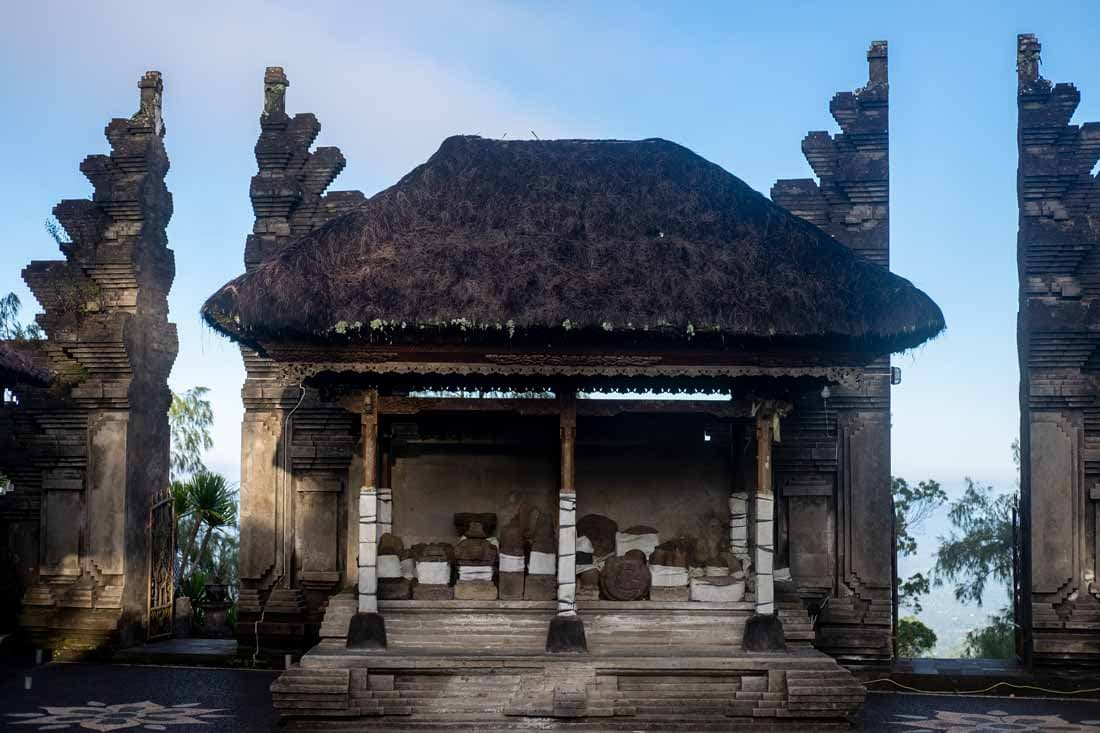
On the western rim of the Batur Caldera is the Penulisan summit, the caldera’s second highest peak after Mount Abang on the eastern rim. At the top of this peak, 1,745m above sea level, is an understated, but highly significant, temple known as Pura Puncak Penulisan.
Sometimes referred to as Pura Tegeh Kahuripan, this is one of Bali’s oldest temples, thought to be first built during Bali’s bronze age. As such, the temple design is unique, following a pyramidal structure (representing a mountain) with seven terraces on the 300-stair path to the very top. The seven terraces are symbolic of sapta loka, the seven upper realms of existence in Hindu philosophy.
Most interesting are the archaeological artefacts and statues kept and displayed in bales at the seventh and highest terrace, or Pura Puncak Penulisan. These ancient remnants were discovered at the temple, megalithic stone statues preserved in this holy sanctuary.
Inscriptions on statues talk of King Udayana Warmadewa, the ruler of Bali in 963 AD; another statue is of Batari Mandul, the childless consort of King Anak Wungsu, who famously built the rock-cut shrines of Gunung Kawi in the 11th Century. Other statues of Hindu gods and deities from Brahma to Ganesha mark the later influence of Bali’s ‘middle’ age, after the Javanese-Hindu Majapahit Empire established its foothold in Bali from the 14th century onwards. Hundreds of lingga statues, symbolic of Shiva, attest to this influence as well. So, this temple at the top of a hill preserves the progression of Bali’s intricate history, from the megalithic era to Bali’s Ancient Era (11th century) to Bali’s ‘Madya’ or Middle Ages (14th century).
In the early morning, cool mountain dew drips off the sagging needles of the surrounding pine trees, filling the air with a mist that gives Kintamani its ephemeral morning atmosphere. Within the walls of the temple, surrounded by these ancient artefacts, there is a serene and almost palpable mysticism.
From the very top of this impressive temple, it is easy to see why kings of old held this site in high regard. Looking east, towards the rising sun, a trifecta of
From the very top of this impressive temple, it is easy to see why kings of old held this site in high regard.
peaks can be seen: Mt.Batur, Mt.Abang and Mt.Agung layered one behind the other on the horizon in one wondrous and humbling scene.
The temple can be accessed from the main caldera road, Jalan Raya Kintamani, taking visitors through the full journey up the steps towards the peak, or Pura Puncak Penulisan. Otherwise, one can drive straight to the temple’s parking area via a small back road.
Read Next
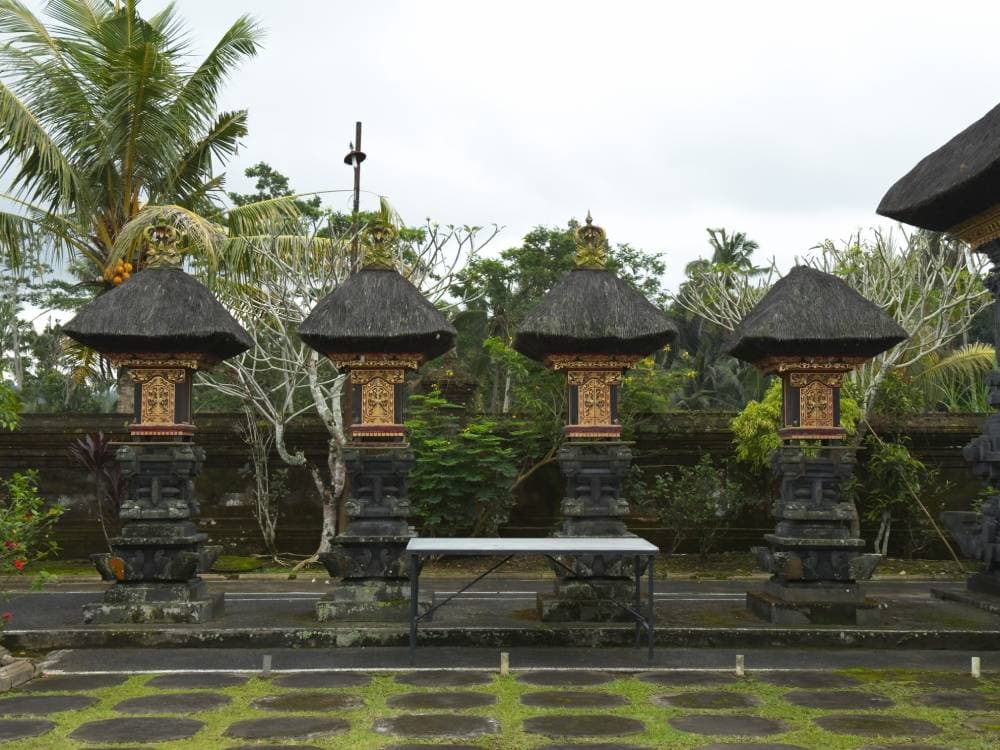
Pura Pegulingan: Traces of Buddhism in Balinese History
Pura Pegulingan represents a unique fusion of Hindu and Buddhist beliefs, a convergence that dates back to Ancient Bali in the 8th century.
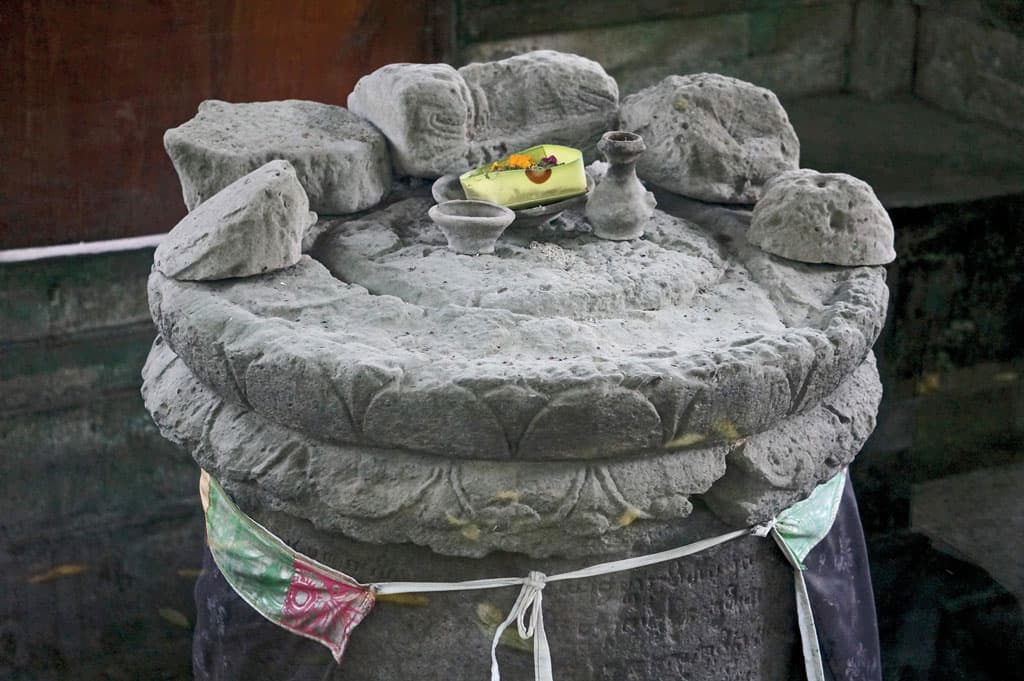
Prasasti Blanjong Pillar: Ancient Inscriptions in Sanur
A small monument known as Prasasti Blanjong is the oldest manmade artefact in Bali that dates back to the 9th century that was only found in 1932.
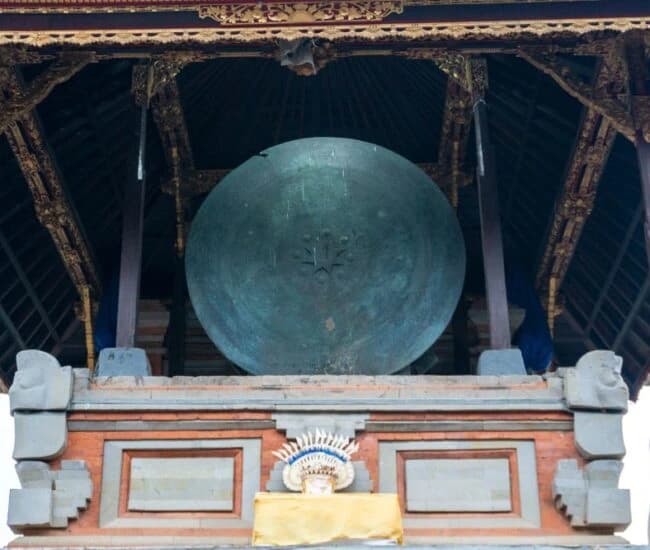
Pura Penataran Sasih and The Moon of Pejeng
This is Pura Penataran Sasih, recognised as a cultural heritage site largely due to the presence of the 'Bulan Pejeng' or Pejeng Moon.
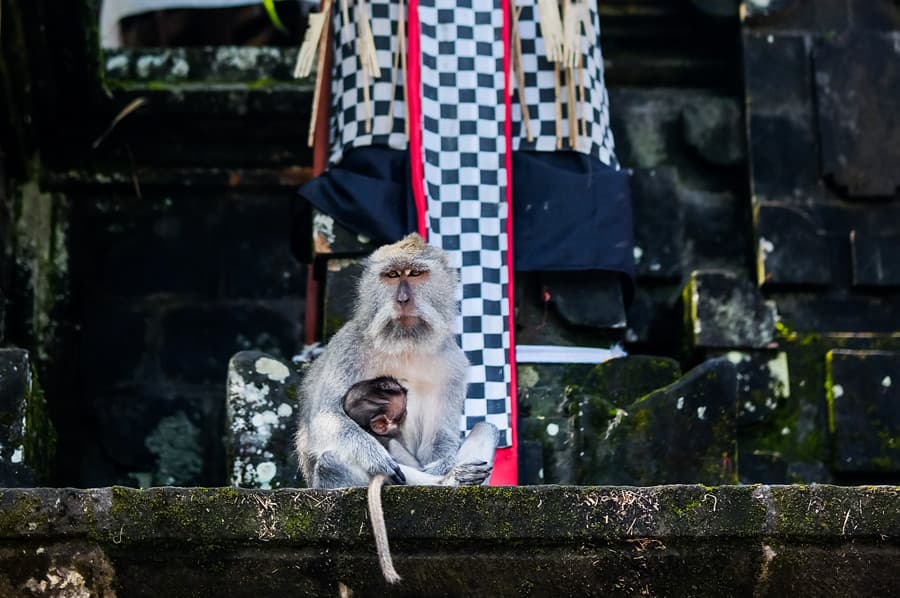
The ‘Brave’ Monkeys of Uluwatu Temple: A Bali Myth
Perched on a cliff, Pura Luhur Uluwatu is a sacred Balinese temple famed for its spiritual history, stunning sunsets, and daily Kecak dance performances.
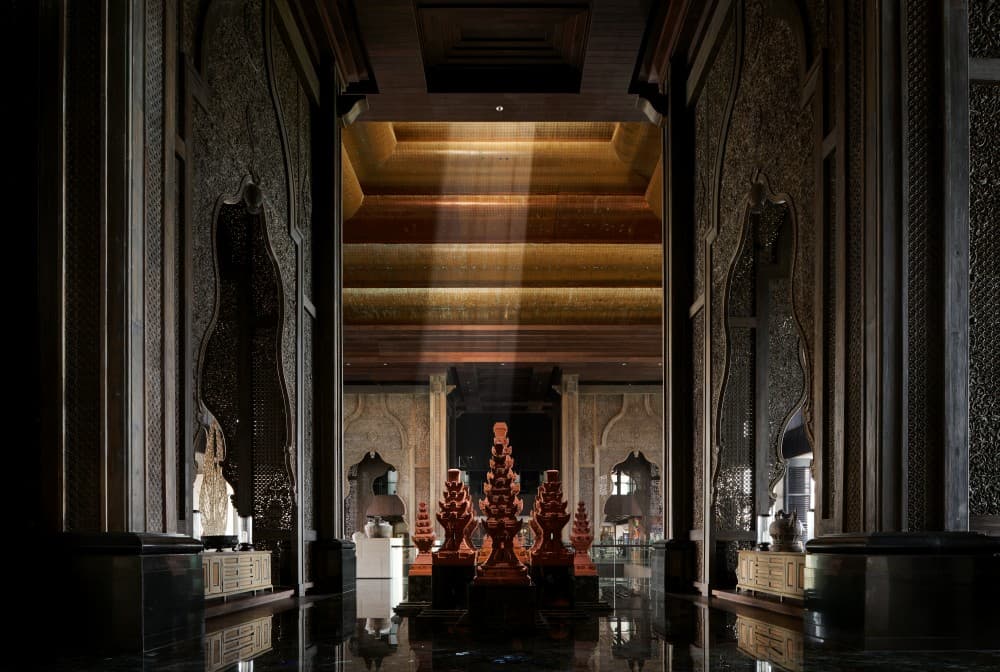
Behind The Apurva Kempinski Bali's Majapahit-Inspired Architectural Masterpiece
The Apurva Kempinski Bali honours Indonesia’s heritage with a majestic design inspired by the grandeur of the Majapahit Empire.
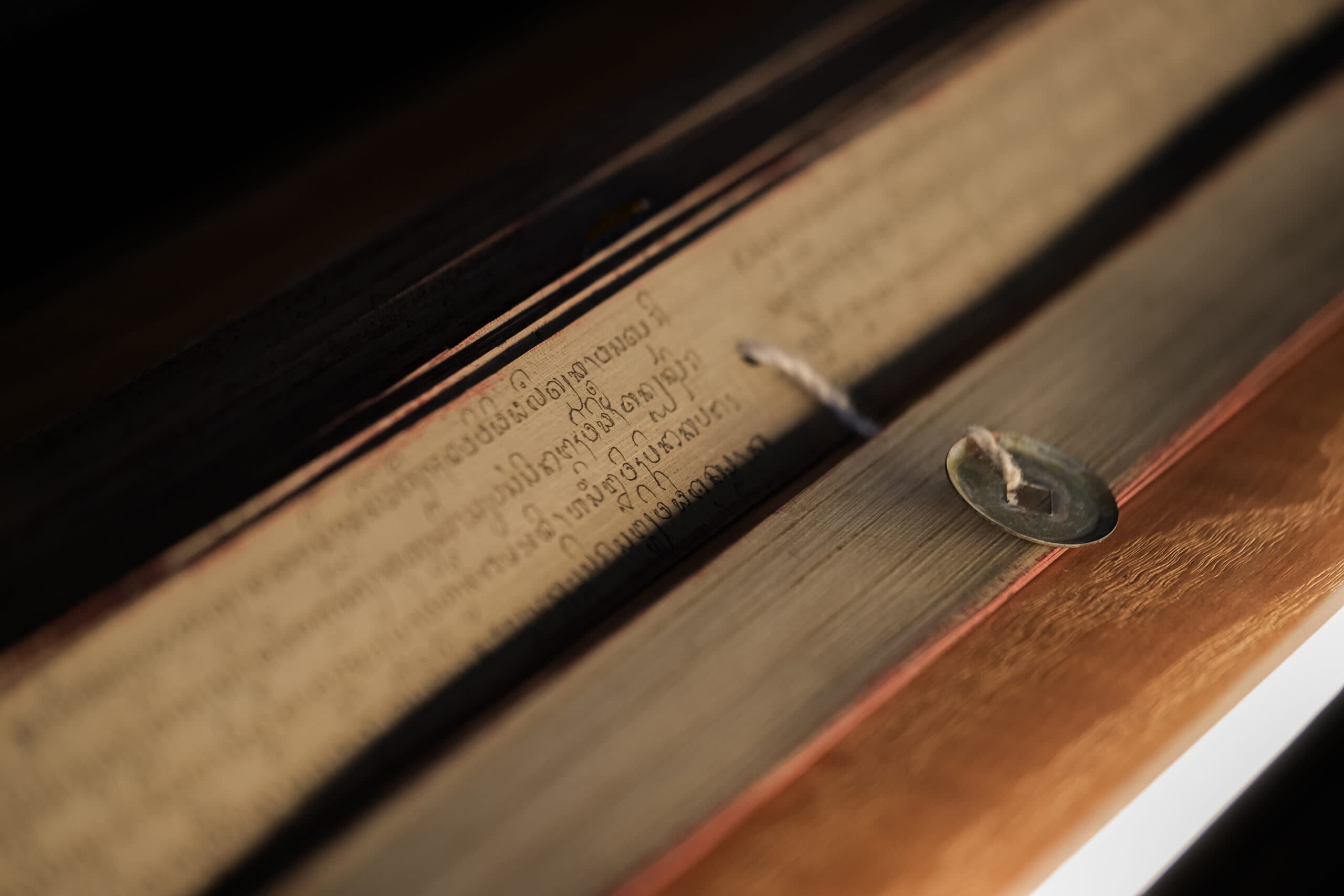
Centuries-Old Manuscripts Showcased at The Apurva Kempinski Bali
Now gracing the majestic Pendopo Lobby at The Apurva Kempinski Bali are historical palm-leaf manuscripts known as lontar, on display until 31 May 2024.